Showing posts with label Jim Hardin. Show all posts

Monday, June 25, 2007

Excerpts From Mike Nifong's State Bar Deposition, Part 1: Nifong, Hardin & Black

DIRECT EXAMINATION BY MR. BROCKER:
Q. Good morning, Mr. Nifong.
.
A. Good morning, Mr. Brocker.
.
...
.
Q. And when Mr. Hardin, Judge Hardin now, was nominated to become a Superior Court Judge, did you seek the appointment as DA?
.
A. In a sense, yes. I had never sought the position of District Attorney because my primary interest was in prosecuting cases in the courtroom, and a District Attorney was not primarily involved with that. Mr. Hardin requested that I apply for or that I allow myself to be considered for the position. What he told me was that he would not get -- he would not be appointed the Superior Court Judge if I did not agree to become District Attorney. It was something, I said, that--because it was not something I ever dreamed about doing--I would need to speak with my wife about. And I did speak with her and we decided that because of my concern for the contined well-being of the office, that it was the best thing to do. And so, I did contact Reuben Young, who was the Governor's Chief Counsel, I think that's what his title is, and submitted a resume and interviewed with him for that position.
.
Q. Did Judge Hardin explain to you what he meant when he said that he couldn't get the judgeship unless you agreed to be the DA?
.
A. Not really. He did say that there were two other people that had been -- I was not even aware that this was something that was in the works, but apparently other people were. And he said that there were two people in particular who had been considered. One of them was Tracey Cline, who remains a prosecutor in the DA's office, as my chief assistant for Superior Court or First Assistant for Superior Court. The other is a man named Marvin Waters, who was previously in the District Attorney's office and works, still works, for the State in some capacity, I am not sure exactly which division he is with now, an attorney capacity, he works in Raleigh. I knew both of them very well. And the understanding that I was given was that there were certain political supporters of Ms. Cline and certain political supporters of Mr. Waters and that the Governor was not looking to disadvantage himself with either of those groups and was looking for somebody who would not -- would not disadvantage either one of those groups. Somebody that people would accept as someone who would do the job and would not have any further fallout.
.
Q. Did you just speak with Mr. Young or did you actually speak with the Governor at some point?
.
A I never spoke with the Governor at any point during the process.
.
Q. In your discussions with Mr. Young, did the subject ever come up about whether or not you would seek election once the term was over?
.
A. In a sense it did. When Mr. Hardin first approached me about the position, he said that one of the concerns that the Governor had in terms of appointing either of these people is that he would be putting somebody in a position that would then make it more advantageous for that person to run for office, and that that was one of the concerns that the Governor had about appointing either of those people. I told Jim at the time, Jim Hardin at the time, that I would not be interested in accepting any position if there were strings attached. And I expressed the same thing when the question came up with Mr. Young. I told him that I would not be able to make a decision about whether I wanted to run for the office or not until I actually had occupied the office and had determined what it was like. Whether it was something that I was comfortable with and whether it was something that I had a sufficient vision for that I would want to continue. And I did tell him, I believe in no uncertain terms, that if there were strings attached to the position, in other words, if he wanted a commitment prior to my going into the office that I either would or would not seek that office, that I was not his man, and that they needed to look elsewhere.
.
Q. So what did you tell Mr. Young was that you wouldn't commit one way or another to whether you would seek election after?
.
A That is correct.
.
Q. Why did you decide to run for election as the DA in late 2005 or early 2006?
..
A. There was -- this is -- it's a little uncomfortable for me to say this, some of these things, and I don't know how to do this otherwise. There was a person who was interested in the job. The only viable candidate other than myself at the time who, I felt, would not be someone that I would want to see the office turned over to. And that would be Freda Black. I mean, it's just uncomfortable to say that. It was -- Ms. Black was the only attorney that I did not retain at the time that I became District Attorney. I agonized over the decision, even though I felt it was the appropriate decision to make, and told her within a couple of days of becoming District Attorney that I would not have a position for her. There were a couple of support people that also ended up leaving the office at some point after that, but she was the only attorney that I did not retain. I allso felt that when I got into the office and got into the process of hiring people and making some changes that I had felt all along what would be beneficial that it was something that I wasn't going to be able to do in a year and a half. And that I did, in fact, have a vision for the office about where I wanted it to go and what I wanted us to be able to do, and that I would need an additional term, you know, past the year and a half, that would give me some extra years to do that. And so, I set off on that course. I had never run for political office before and I don't know that I fully appreciated exactly what I was getting myself into. But once decided that I was going to do that, I was committed to that course of action and followed through on it.
.
Q. From your answer, I take it that you decided to run -- as far as timing goes, you decided to run after you knew Ms. Black either announced or was planning on running for the position, as well?
.
A. Well, there had been speculation for some time that she was going to run for a District Court judgeship or something along those lines. she had -- for most of her career as a prosecutor in Durham, she had actually lived in Wake County, which would make her ineligible for a seat as a judge or as a District Attorney. And so relatively recently she had moved into Durham, and it was generally perceived that she was looking for that kind of an office. And the original perception was that she was most likely going to be interested in seeking a District court judgeship. The -- my decision to run actually, I believe, was made before she made any announcement. And one of my hopes in doing that was to dissuade her from seeking that particular office, the office of District Attorney.
.
Q. Did you announce your candidacy before she did?
.
A. I did. Yes, sir. I don't remember the exact timing. I spoke to a reporter--I believe it was John Stevenson--sometime maybe in June or July about my decision to -- that I had made the decision to seek a single term. And then at some point after that, she made an announcement that she was also going to be seeking that office.
.
Q. Why did you decide not to -- why was she the only person that you decided not to retain in your office?
.
...
.
A. I mean, I can tell you in general terms that there were -- there was a perception in the office by people that were working in the office that Ms. Black was paid a lot of money and didn't do a lot of work, and that created a certain amount of resentment, especially among the other relatively senior Superior Court prosecutors. During the first two days -- I say during the first two days, I believe it was during the first two days that I became the -- after I became the DA, I also got visits from the sergeant who was in charge of the Investigations Division, and also the Chief, and I believe it was Major council, so a sergeant, chief and a major from the police department who came to me to express--the sergeant by himself and the chief and the major together--their concerns over relationships between their department and Ms. Black...
..
Q.Okay. How would you -- prior to you taking over as a DA, generally how would you describe your relationship with Ms. Black, professional relationship in terms of --
A.There were no -- no specific issues with that relationship...Well, part of my job was to get along with the people in the office. I mean, I think that's always part of the job anytime you're working in that kind of a setting. of course, I was also the Chief Assistant, and so I had some supervisory responsibilities over everyone else in the office, although with most people that didn't have to be regularly exercised. Generally speaking, if things came up when Mr. Hardin was not in the office, I was expected to deal with it. And so, in that connection, I had become aware of some of these frayed relationships that seemed to center around Ms. Black, and I was aware that there were some people who had left the office because of her presence in the office, and that there were other people who were planning or were considering leaving the office, had put in applications other places. In terms of our personal interactions, they were always very friendly. I never -- I did not see many of the -- actually, I don't recall seeing any of the people in the office, other then Mr. Hardin, in even on an irregular basis outside the office. I would occasionally, since Jim and I had been friends for a while, we were part of a circle of couples that would often get together for dinner, and so I would see him outside the office. But otherwise, I didn't really have any outside relationships with anybody in the office. So, within the office, we were friendly, but I wasn't especially close on the social basis with anybody in the office, so I didn't -- that would have made it kind of difficult to do my job.

Saturday, June 23, 2007

N&O, Herald-Sun Applaud Hardin Appointment

The Triangle's two daily newspapers, The News & Observer and The Herald-Sun, have published editorials today applauding the appointment of former Durham County District Attorney Jim Hardin to replace deposed Minister of Injustice Mike Nifong, his handpicked successor.

News & Observer:
A steadying hand
Durham's new interim district attorney, appointed by Governor Easley, should help restore public confidence in the office

Jim Hardin gained the most visibility as Durham's district attorney when he successfully prosecuted novelist Mike Peterson in 2003 in the murder of his wife, Kathleen. But even before then, Hardin was known as a fairly cool customer in the way he ran the D.A.'s office. Certainly his return for a two-month stint in that position offers a measure of hope for order to be restored. Governor Easley appointed Hardin on Wednesday.

Hardin sounded the right notes at a news conference the day after his temporary selection to replace Mike Nifong. Among those notes was his vow for "transparency," meaning that the office will be committed to publicly explaining its decisions. Hardin acknowledged that goes against the instincts of most folks in law enforcement. That type of openness, he said, "is typically something we're not comfortable with, but I believe we have to be as transparent as we can."

And Hardin will have a free hand to make personnel changes he deems necessary. He clearly understands just how much damage has been done in the wake of the Duke lacrosse case fiasco. Indeed, it roiled hard feelings on the part of many in the community, and Hardin vows to restore credibility and integrity to the office. He returns with a good bit of support in Durham, which ought to help.

It's hard to know just what kind of shape the office is in. Nifong, whose name is now synonymous with wretched prosecutorial excess, was appointed to the district attorney's post by Easley after the governor made Hardin a special Superior Court judge. But Nifong has gone down -- disbarred, resigned -- and deservedly so, after his pursuit of Duke University lacrosse players in a sexual assault that Attorney General Roy Cooper ruled never happened.

To say that public confidence, and that of the legal community, is low regarding the Durham D.A.'s office is a woeful understatement. Hardin has a chance to right the ship, and there's confidence now that he will reach out to the community to try to show citizens that the office intends to operate on the up-and-up. Lawyers who frequently deal with the office already have indicated they have more confidence in Hardin.

The power of district attorneys in this state is vast, and the legislature to some degree is reviewing that, which is good. Nifong's behavior was another illustration of how that power could be abused, and prosecutors clearly are concerned that their authority could be curbed and scrutiny of them increased. That might be appropriate -- limiting control of court calendars, for example -- along with a general effort to educate D.A.s that their first mission is justice, not winning.

In any event, Durham is better off with an experienced prosecutor who knows the ropes. And the rules.

The Herald-Sun:

Those who long for the day Durham can move beyond the lacrosse case should be pleased with Gov. Mike Easley's selection of Jim Hardin to serve as temporary district attorney.

Hardin preceded Mike Nifong in the DA's job, serving for 11 years until 2005 when Easley named Hardin to a Superior Court judgeship. His appointment should return desperately needed stability to the office after the nightmare of the lacrosse case.

Hardin will need to step down from his judgeship while he returns to his former office, so the community owes him a big debt of gratitude.

Both Easley and Hardin must feel chagrined for recommending Nifong as DA. In retrospect, it was a mistake. But based on Nifong's 28-year record of solid experience, how could anyone have predicted that his tenure would go so terribly wrong?

But that's in the past, and tapping Hardin as a temporary replacement feels like the right move for the future. It puts a trusted, sure hand in the office, as well as a person who can help choose a permanent replacement.

Hardin certainly knows Durham well. More importantly, he is well-versed in the day-to-day demands of the position, so he will have no learning curve. The last thing Durham needs now is someone whose inexperience could lead to missteps.

As district attorney, Hardin supervised many cases, but he will always be remembered for the Michael Peterson trial. Peterson was charged with murdering his wife, Kathleen, who was found covered in blood at the bottom of a staircase in the couple's Forest Hills mansion in December, 2001.

Peterson hired a high-powered team of defense attorneys who belittled the Durham Police Department's conduct of the investigation and mounted a costly defense that included celebrity witnesses such as blood spatter expert Henry Lee.

But the quality of the work of Hardin, Assistant DA Freda Black and local and state investigators was reaffirmed when the jury returned a guilty verdict. Peterson is now serving a life term.

That performance is in marked contrast to Nifong, who pursued a sexual assault case against three lacrosse players for more than a year on the basis of the shakiest evidence imaginable.

Durham needs someone to restore confidence, and Hardin is an excellent choice.

For the duration of the Hoax, the editorial boards of both newspapers offered repeated affirmations of the thoroughly exposed Minister of Injustice. With that in mind, it is difficult to place much confidence in their endorsements of Hardin.

Today's editorials alternately ignore or gloss over the fact that it was Jim Hardin's recommendation of Mr. Nifong that directed Governor Easley to his "worst ever" appointment. Hardin's flawed evaluation of a prosecutor he worked alongside for nearly 20 years and selected, not only as his successor, but also as his top assistant, reflects poorly on Hardin's personnel evaluations and impartiality at a time when those characteristics appear to be in demand. Incredibly, while rationalizing the mistake that was Nifong, the Herald-Sun suggests that Hardin is due gratitude for his return to clean the house he left in disarray.

Both editorials also point to the successful prosecution of Michael Peterson as cause to have confidence in Hardin's return. Despite the notoriety of that case, it is difficult to see the connection between a highly publicized trial win that preceded elevation to a judgeship and eliminating a "justice be damned just win at all costs" approach to prosecution.

The News & Observer mentions the expressions of confidence in Hardin offered by local defense attorneys, yet fails to note the generous campaign donations and very public support many of those same attorneys offered the volatile Mr. Nifong and his Hoax when their legal livelihoods were at his mercy. As with the endorsements by the editorial boards, the support of attorneys who championed Mr. Nifong offers little reassurance.

In fairness, support for the appointment of Hardin has not been limited to those who supported and enabled Mr. Nifong and his Hoax.

"I think Jim will bring sorely needed integrity to the office," said Jackie Brown, Nifong's former campaign manager who became one of his biggest critics. "People like him, trust him, and he's just what Durham needs right now."

"Jim was an excellent district attorney, and I enjoyed working for him for many years," said former Assistant District Attorney Freda Black, who helped prosecute the Peterson murder trial [and campaigned against Nifong]. "It sounds like a sound decision on the governor's part."

For his part, DA Hardin has said many of "right things" since his appointment:

  • "There were a lot of reasons for me to agree to come back and do whatever I can to help this office and move this office forward";
  • "You all have been reporting for over a year about the dysfunction of this office. I'm going to do the best I can to assess that for him [Easley] and report back"
  • "We were going to learn from this and move forward and represent the people of Durham County in an ethical and legal way in everything we do";
  • "I made it very plain and very clear (to the office's staff) that every decision we make is essentially going to be based on one thing: Do the right thing for the right reason, do it in an ethical way and a legal and efficient way. We're going to do that from start to finish."

While cautious and skeptical, we share, with reservations, the hope that DA Hardin's words do not prove empty.

When DA Hardin does the "right thing for the right reason" by:

Hardin's words will have proven to be substantive and genuine, rather than fluffy, feel good sound bites.


Philip Wood

Nifong's Old Cases Questioned

"This matter appears to be an aberration in a couple of respects. It appears to be an aberration in the life and career of Michael Nifong. It appears also to be an aberration in the way justice is handled in North Carolina. It’s an illustration of the fact that character — good character — is not a constant. Character is dependent upon the situation. Probably any one of us could be faced with a situation at some point that would test our good character and we would prove wanting. And that has happened to Mike Nifong. But the fact that it has happened and the fact that we have found dishonesty and deceitful conduct requires us in the interest of protection of the public to enter the most severe sanction that we can enter, which is disbarment."- DHC Chair F. Lane Williamson

In announcing the unanimous decision to disbar former Durham County District Attorney Mike Nifong, Disciplinary Hearing Commission Chair F. Lane Williamson indicated that he believed the misconduct of the defrocked attorney was an "aberration." Williamson's remarks painted the picture of Mr. Nifong as an honest prosecutor led astray by political ambition. For many observers, Williamson's characterization has been difficult to accept. Given the extreme and persistent misconduct that led to Nifong's disbarment, it is not surprising that pundits are now calling for investigations into the humiliated ex-prosecutor's old cases.

In "Disdained, Disgraced, and Disbarred: Mike Nifong May Be Gone, But The Damage Done By Durham's Dirty Prosecutor Will Live On", Jonna Spilbor of Find Law writes:

Nifong May Have Committed Misconduct in Other Cases Too

Interestingly, Nifong served as an Assistant D.A. in the controversial murder prosecution of novelist Michael Petersen - another Duke graduate. (Petersen's trial is chronicled in the documentary "The Staircase.") The investigation began in 2001, and ended with a conviction in 2003. Did Nifong learn his dirty tactics then -- or earlier? Did he use his dirty tactics then - or earlier?

The misconduct revealed in the Duke lacrosse case merits an investigation into Nifong's past prosecutions, as well. Nifong would have happily sent three completely innocent young men to jail in the Duke lacrosse case. Did he happily do the same to other innocent people in the past?

Today, Aaron Beard of the Associated Press reports that anticipation of inquiries into past misconduct is shared by Nifong's replacement, Durham County District Attorney Jim Hardin; the Judge that suspended Mr. Nifong after he attempted to delay his resignation, Orlando Hudson; and the North Carolina Innocence Inquiry Commission, a State review board headed by Kendra Montgomery-Blinn, who testified to the integrity and character of Mr. Nifong at his DHC trial.

The official assessment of Mike Nifong's handling of the Duke lacrosse case - "intentional prosecutorial misconduct" - clearly could not have been more harsh.

What's not yet clear: Will Nifong's misdeeds in his last case as a prosecutor give defense attorneys an easy path to overturn his nearly three decades of work in the Durham County district attorney's office?

"I don't think the fact that he was shown to be so unethical in the Duke lacrosse case will mean that other cases he's prosecuted will automatically be reversed or appealed," said Steve Cron, a defense lawyer from Santa Monica, California, who has practiced for 33 years.

"But his behavior in this case was so outrageous and so beyond what's required of an ethical prosecutor that everyone's going to start going back and looking."

...

While Hardin plans to be in place for no more than few months, both he and the permanent district attorney Easley appoints later could soon find themselves in a courtroom defending Nifong's work in other cases.

"There will be people who might challenge some other cases," Hudson said. "I don't know how many cases are out there potentially. I would expect that based on these hearings there will be inmates who challenge their convictions."

Nifong has a long history in Durham to sort through. He joined the county prosecutor's office as a volunteer in 1978 after graduating from law school at the nearby University of North Carolina at Chapel Hill. He eventually worked his way up to be Hardin's chief assistant before being diagnosed with prostate cancer in 1999.

Nifong stopped trying cases to undergo surgery, radiation and hormone therapy before returning and handling traffic court at Hardin's request. That limited the number of criminal cases he tried in recent years, which means any review of that work would be close to a decade old. Without question, the biggest case of his career involved the Duke lacrosse team.

"I personally doubt (a review) will find anything at this stage because the cases are too old and that's not the reputation he had before," said Stan Goldman, who teaches criminal law and procedure at Loyola Law School in Los Angeles. "But I think lawyers are going to file motions. It'll clog the courts for a while. Maybe they'll find something. I tend to think it's unlikely, but who knows?"

Longtime Durham lawyer Butch Williams, who represented an unindicted lacrosse player last year, said he had never before questioned Nifong's judgment. He predicted only a handful of attorneys will feel the need to go back and review their old cases files.

"I've known Mike for 28 years and I think this case is an aberration more so than the norm," Williams said. "I don't think there's going to be any mass rush to the courthouse to go back and review because that was not the norm. ... To come back now and say, 'I didn't know this or that,' it would be mighty hard to get a review unless there are substantive issues."

The recently created North Carolina Innocence Inquiry Commission, which is designed to investigate claims of actual innocence in past cases, does not expect an avalanche of filings involving Nifong's past work. But commission chairman Superior Court Judge Quentin T. Sumner said through a spokesman the panel will look at inquiries from Durham on a case-by-case basis.

Carl Tobias, a professor at the University of Richmond law school, said any review of Nifong's past work might serve another purpose. Nifong's actions, which the disciplinary committee concluded were designed to help him win his first election as district attorney, hurt the reputation of the Durham's criminal justice system - something a review could help remedy, even if nothing comes out of it.

"People are within their rights and it's legitimate to inquire," Tobias said. "For a lot of people, there's a sense that on one big case he made a lot of mistakes. That doesn't mean he did before, but I think people need to find out so it does satisfy them."

Although new again DA Hardin has attempted to portray the Nifong/Mangum Hoax as "ancient history," it would appear that his efforts to ignore the recently exposed, and admitted, egregious misconduct of his handpicked successor will fail as the Nifong Effect promises to continue to impact his office for the foreseeable future.

Thursday, June 21, 2007

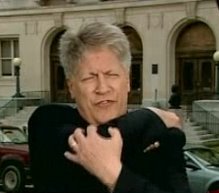
Video: Hardin Press Conference


.

Flashback: Greatest Hits of Jim Hardin, Vol. XV

"Walking papers withheld" - The News & Observer (August 19, 1994)

So, you thought the initials D.A. stood for district attorney?
.
They do, but until a couple of days ago, they could just as easily have stood for "didn't ask" -- as in Durham inmates against whom charges had been dropped staying in jail because they didn't ask.
.
That, amazingly, was the reason Durham D.A. Jim Hardin gave for not notifying defense attorneys that charges were no longer pending against their clients and that they were free to go. As a result of Hardin's refusal -- and the refusal of D.A.s in other parts of the state -- to extend this seemingly common courtesy, some unfortunate souls are left languishing behind bars for several weeks after they should have been set free. Often their only "crime" was an inability to post bail.
.
Hardin saw the light -- and then, only dimly -- after a complaint was lodged by attorney Ann Loflin, who discovered that her client, Tyrone Edwards, remained locked up five weeks after charges against him had been dropped. Hardin subsequently instructed his staff to inform defense attorneys and the clerk of court in writing when charges have been dismissed.
.
But he did so with the petulance of a little boy being forced to eat his brussels sprouts. Still maintaining that his office has no legal responsibility to notify people when charges have been dropped -- in other words, to let them know they're free to go -- Hardin downplays the ethical responsibility. His reluctance sounds like nothing more than sour grapes from a prosecutor who cynically wants to reap a measure of revenge despite, or maybe because of, his inability to secure a conviction.

Flashback: Greatest Hits of Jim Hardin, Vol. XIV

"Tag-team justice" - The News & Observer (May 21, 1999)

The marriage of convenience between District Attorney Jim Hardin and chief Superior Court Judge Orlando Hudson may have begun as a straightforward attempt to clear a huge backlog of criminal cases in Durham County.

...

But the arrangement now suggests a too-cozy collaborative effort between a gung-ho prosecutor and a judge who must maintain his impartiality. The relationship also illustrates potential risks under the North Carolina law that gives district attorneys the power to say when and in front of which judge criminal cases are heard.

Hardin controls the scheduling of those cases, and Hudson in recent years has heard nearly all the major criminal cases in Durham County. (Since 1995, Hardin has channeled 11 of 12 high-profile murder cases to Hudson's courtroom.) ... other judges and defense attorneys indicated, in a News & Observer story, that they find the arrangement curious...

... Superior Court Judge Abe Jones of Wake County, recalling a Durham rotation, notes that he ruled against prosecutors on some occasions and wasn't assigned to hear criminal cases again...

One judge who seems to find the Hardin-Hudson arrangement less than ideal is state Chief Justice Burley Mitchell...

Is Hardin seeking an advantage? He says no, that he's a diligent prosecutor trying to move cases through the system. But Hudson said, "Jim Hardin doesn't put himself at a disadvantage." That's a disturbing statement, for it indicates that Hudson believes Hardin is indeed "judge-shopping," and that there's nothing particularly wrong with it. A judge should have a more ambitious hope for the system than the cynicism that statement conveys.

North Carolina is the only state that gives DAs the exclusive power to schedule cases. A bill sponsored by Sen. Frank Ballance Jr. of Warrenton would end that, but it has been gutted (again this year) by a powerful district attorneys' lobby that can't countenance letting loose the courthouse reins. The Hardin-Hudson partnership is a strong argument for reviving Ballance's bill.

It's also a phenomenon that, in the meantime, Chief Justice Mitchell should address in no uncertain terms - not for efficiency's sake, but for the sake of justice.

Flashback: Greatest Hits of Jim Hardin, Vol. XIII

"Bargains by the bunch" - The News & Observer (September 21, 2001)

As hard as it is to believe, just one of 22 murder cases went to trial in Durham County in the last fiscal year. What's more, District Attorney Jim Hardin's office disposed of two of every three of the remaining homicides by offering the defendants plea bargains on lesser charges.

... Durham's trial and plea-bargaining rates are way out of line when compared with other judicial districts in the state. Statewide, in fact, 23 percent of murder cases went to trial in the same period that Hardin's office prosecuted less than 5 percent.

Hardin's reasons for his office's swiss-cheese performance ring hollow.

He says he doesn't have enough assistant district attorneys to take homicide cases to trial. ...

Hardin complains about a staff that is "just getting to the point" where they "can go into Superior Court." An inexperienced staff, though, is his responsibility. He's been district attorney since early 1994.

He also hints that plea bargains have to be offered because police don't collect the kind of evidence that juries need to return guilty verdicts.

... Durham police are known for solving an embarrassingly low number of crimes. Still, if police are doing sloppy work, Hardin owes it to the community to make that fact known, not quietly make deals with possible murderers.

Victims and their families deserve aggressive prosecution of homicide. And it should go without saying that killers cannot be returned to the streets as a matter of convenience or ineptness. Durham needs Hardin to fix the problems, not give excuses.

Flashback: Greatest Hits of Jim Hardin, Vol. XII

"Judge orders DA to look for more police subpoenas" - Jaleh Hagigh, The News & Observer (May 19, 1994)

Eight months ago, Durham police admitted improperly using subpoenas to get the telephone records of private citizens who weren't under criminal investigation.

The admission came after three lawyers filed a lawsuit to gain access to the subpoenas, which they contend are public documents that the police department was concealing.

Now those lawyers have turned their attention to District Attorney Jim Hardin Jr. On Friday, a judge granted a motion by the lawyers and ordered Hardin to turn over any additional subpoenas that might exist in his office. The judge asked Hardin to make a "reasonable inquiry" into the matter, including interviewing staff members, and to search his office if necessary.

Lawyers Alex Charns and Bill Goldston said they think there is at least one such subpoena in Hardin's office. They also claimed victory, saying the judge agreed with them that the documents are public records.

"Their defense was, 'We don't have to turn them over because they're illegal,' and our argument was it would be a real travesty of justice if the district attorney could conceal illegal subpoenas on the grounds they were illegal," Goldston said.

...

The illegal use of subpoenas by police was revealed last year after Charns and Goldston filed suit in Durham Superior Court. In September, police officials conceded that officers had photocopied at least 20 times a blank subpoena that included the signature of a prosecutor. Police used the documents to get phone records from GTE South in 1991 as part of an investigation into allegations that a prostitution ring was operating out of police headquarters under then-chief Trevor Hampton. The probe turned up no such evidence.

The records listed phone calls made by people and businesses that had not been charged with any crimes. ... Police tried to keep the documents secret but then turned over 37 subpoenas.

The suit against the district attorney originally named Ron Stephens, who was Durham's top prosecutor at the time and is now a Superior Court judge. The suit now names Hardin as the main defendant.

Flashback: Greatest Hits of Jim Hardin, Vol. XI

"City leaders underscore need to fight hate crimes" - The News & Observer (March 8, 1999)

Leaders from across the city gathered Thursday to publicize efforts taken to prevent hate crimes in Durham.
.
Although the city has experienced only one documented case of a crime motivated by bias since the legislature enacted a hate-crime law in 1991, city officials said the issue deserves constant attention.
.
"We're not going to stand for this type of violence," District Attorney Jim Hardin Jr. said. "It's important that we've taken a progressive stance to protect victims of hate crimes."

Flashback: Greatest Hits of Jim Hardin, Vol. X

"Durham DA gets 'judge-shopping' reputation " - John Sullivan, News & Observer (May 19, 1999)
Five years after Durham District Attorney Jim Hardin and Chief Superior Court Judge Orlando Hudson teamed up to reduce a huge backlog of cases, the district's other three Superior Court judges say the two are bypassing them and funneling the county's major criminal cases to Hudson.
.
Defense lawyers call it judge-shopping, and they say Hardin is doing it to punish judges who have ruled against the prosecution.
.
"I think there is forum-shopping being abused by the district attorney, and many experienced judges have heard few felony cases while many are placed on one judge's platter," said Durham Superior Court Judge David Q. LaBarre, a 20-year veteran of the bench.
.
Superior Court Judge Ronald Stephens says the one major case he has heard in the past several years came only after he complained to Hudson and the state Administrative Office of the Courts. "It's like running a basketball team with a player-coach that brings the ball down the court and shoots every time," Stephens said. "There is some frustration in that."
.
Superior Court Judge Leon Stanback, who was named "Outstanding Trial Judge of the Year" for 1998 by the North Carolina Academy of Trial Lawyers, says he can't recall hearing a first-degree murder trial since Hardin became district attorney in 1994. "I think they select certain judges, and DAs are in good position to do that," he
said. "If they don't like the way they rule, I imagine they have the prerogative of what judges get certain cases."
..
Hudson and Hardin say the perception is the result of a necessary relationship that saved Durham's court system from collapsing under the weight of a huge case backlog. They began discussing the problem in 1993, Hardin said, before he became district attorney and just after a lawsuit was filed against then-District Attorney Ronald Stephens, who held the job for 11 years and is now a Superior Court judge.
.
Hudson and Hardin devised a case management system that went into effect in 1995, and Hudson says he took many cases just to get the system working.
..
"As a result, over the past four years I have handled just about every criminal case in Durham County," Hudson said. "I think that is the way it just worked out - that I got 11 of 12 important cases. From that standpoint, of taking on cases to get it done, it's probably a legitimate complaint."
.
He says Hardin is just using the scheduling power given him by the legislature. "Jim Hardin doesn't put himself at a disadvantage," Hudson said. "I don't know of any official that puts his office at a disadvantage. I think the DA has a lot of power, and when the legislature leaves scheduling in the hands of the DAs, you have sanctioned judge-shopping."
.
... Judge-shopping is legal in North Carolina, the only state in the country where district attorneys decide when and where a case goes to trial. The American Bar Association and the National Center for State Courts say the practice isn't fair. Defense lawyers and judges say it allows district attorneys to punish judges who rule against them by giving them minor cases while important cases wait to be heard by judges who are thought to be sympathetic to a prosecutor's case.

Flashback: Greatest Hits of Jim Hardin, Vol. VIII

"Durham courthouse sees changing of prosecutorial guard" - Benjamin Niolet, News & Observer (April 28, 2005)

With his hand on his grandfather's Bible, the prosecutor swore that he would be a good judge. Jim Hardin then put on the robe some lawyers call the "black dress" and made Mike Nifong the new district attorney for Durham County.

...

Hardin and Nifong took their new jobs Wednesday in front of Durham Superior Court judges Orlando Hudson and Ronald Stephens and an audience of about 200 of Durham's leaders, lawyers and on-lookers.

- POWER LOSS: Hardin said Wednesday was the last day when he woke up with the power to dismiss enough cases to clean out the county jail. "Obviously I won't do that, and I know Mike won't do that either," Hardin said. Nifong quipped, "I asked him to."

WHAT OLD DA GAVE NEW DA

1. A District attorney's badge kept in a glove compartment for 11 years

2. Two "solicitor" T-shirts

3. White shirt with bull's-eye on it

4. Key to the DA's bathroom

5. The missing files from all the Strickland/Covington Cases*

6. Instruction manual on how to conduct illegal lineups*

7. David Freedman's business card*
*...ok, so we added the last three...

Flashback: Greatest Hits of Jim Hardin, Vol. VII

"Judge seeks files mystery answers" - John Sullivan, News & Observer (August 25, 1999)
Durham's top judge said Tuesday that he plans to meet with Clerk of the Court James Carr, the State Bureau of Investigation and District Attorney Jim Hardin to find out why files in several high-profile cases are missing from the Durham courthouse.

In two recent cases involving prosecutor Ralph Strickland, District Court Judge Craig Brown and lawyer Wesley Covington, files have disappeared, meaning authorities might never fully know what happened or who authorized the reopening of old cases, which is done only rarely under North Carolina law.

In the case of Gregory Watts, files were cleared from the county's court computer system and paper records were removed from the shelves even though the SBI denied his request for an expunction three times. Some of the records in the Watts case reappeared after The News & Observer raised questions about the case, but important computer records are still erased.

Last week Senior Resident Superior Court Judge Orlando Hudson, who signed two orders in the Watts case, told the state Attorney General's Office that he might have been misled about Watts' eligibility for expunction, and Hudson asked the state attorneys to look into the case.

...

Still missing from the court record is a document authorizing the reopening of the cases. Superior Court Judge David LaBarre says Hardin signed that order agreeing to put the cases back on the court calendar. Hardin says he didn't.

In a letter to The N&O on Tuesday, Hardin stated that he had reviewed the files in the case and Strickland had full authority to dismiss those cases.

In another case, court computers indicate Judge Brown last year overturned two 1980s drunken-driving convictions for Ronald Tabron, though Brown says he remembers neither and was out of town at a judicial conference when one was filed. Covington represented Tabron in that case.

Flashback: Greatest Hits of Jim Hardin, Vol. VI

"Durham judge asks SBI to look for crucial paper" - John Sullivan, News & Observer (August 28, 1999)

A Durham Superior Court judge has asked the State Bureau of Investigation to find out what happened to a key document that disappeared in the case of a man who had his criminal record erased even though he wasn't legally eligible.

Judge David LaBarre said Friday he had called investigators because he is certain a document re-opening the case of Gregory Watts was signed by Durham District Attorney Jim Hardin. But Hardin says he never signed the order, and it is missing from files that only recently have come to light.

"I am concerned with the possibility of tampering or absence of records, so I asked a special prosecutor and the SBI to re-examine the file," LaBarre said Friday. "There is probable cause to indicate documents were added or removed since the previous investigation by the SBI," he said. "They indicated to me that files were missing and only recently were they aware that some were in a vault."

The search for the document is just one part of the SBI's second investigation of the Watts case, which was reopened after The News & Observer raised questions about the way the case was handled by Watts' attorney, J. Wesley Covington, and former Assistant District Attorney Ralph Strickland. Files in the case previously thought destroyed were produced by the clerk's office after the questions were raised.

...

Motions filed in the case said he was 17 when Watts committed all the crimes, and three times Durham judges approved the expunction. But each time, the SBI later denied them, saying Watts was too old.

Because of a glitch in the way expunctions are done in North Carolina, Watts' files were cleared from the court computer system and paper records were removed from the shelves and placed in the county's vault, despite the SBI's findings.

"His record is not expunged by the SBI, but the county believes it is," said Senior Resident Superior Court Judge Orlando Hudson. "That's the glitch, the loophole we want to close."

In the end, the cases were reopened by LaBarre and dismissed. LaBarre said he ordered the cases reopened after he read a document signed by Hardin that said the District Attorney's Office approved the move. But Hardin says LaBarre is wrong.

The file contains two photocopies of a motion signed by Covington asking the court to throw out Watts' convictions, but they are not stamped by the clerk as official court records and don't contain Hardin's signature.

LaBarre said that is inconsistent with his recollection of the case.

"The motion purported to show the signature of James E. Hardin Jr., the DA of Durham County," LaBarre said. "I suppose there is the potential that an unauthorized signature was presented to this court," meaning Hardin's signature might have been forged.

Documents in the file revealed another problem: Strickland dismissed Watts' charges two days before LaBarre signed the order reopening the cases, a move LaBarre said could make the dismissals invalid.

Hardin said in a letter last week that he had reviewed the files in the case and found no problem with the dismissal and that Strickland had full authority to dismiss the cases.

...

Hudson, who signed two orders in the Watts case, told the state Attorney General's Office last week that he might have been misled about Watts' age.

Flashback: Greatest Hits of Jim Hardin, Vol. V

"Durham's courthouse favors" - News & Observer (October 21, 1999)
Lawyer H. Woody Vann says there is a class of defendants in Durham County - doctors, lawyers and police officers - who are given special treatment in court when it comes to traffic tickets. Nowhere would that reality - which Vann describes as "a fact of life" - fit with the constitutional guarantee of equal protection under the law.

Vann happens to be a longtime friend and former campaign treasurer of Durham District Attorney Jim Hardin.

...

"If I can't get my own employee relief from a traffic ticket," Vann told The N&O's John Sullivan, "what can the general public expect from me? It happens with doctors and police officers and it's just a fact of life." That is a troubling assertion - especially in light of other recent disclosures in Durham of apparent favoritism, back-hallway deal-cutting and missing court records, all involving Hardin or close associates.

...

By now the public ought to be squirming over the health of Durham's justice system. But residents can only wait for the results of several investigations, involving agencies from the State Bureau of Investigation to the state Judicial Standards Commission.

Flashback: Greatest Hits of Jim Hardin, Vol. IV

"A smudged picture of justice" - Ruth Sheehan, News & Observer (October 22, 1999)
What in the world is going on in the Durham courthouse these days?

...Allegations in the air:

That drunken driving charges were unlawfully thrown out. That one man's record was inappropriately expunged. That a man with a dangerous driving history got his case pleaded down to nothing. That there are different "rules" for people with lawyers and for those who represent themselves.

The charges have surfaced over the past 11 months, under the scrutiny and relentless reporting of N&O reporter John Sullivan. In every case, they come back to one man: Durham District Attorney Jim Hardin.

Hardin runs the office. His lawyer friends handled the cases.

It was his campaign treasurer whose client kept his license - after he was nabbed for his 15th moving violation.

Coincidence? Uh, yeah.

...Fact is, Hardin is pretty tight-lipped all around these days. I could not reach him by phone Thursday afternoon. And he refuses to speak to Sullivan entirely, demanding all questions in writing. Hardly appropriate isolation for a public official.

But even when he isn't talking, Hardin's court record says a lot:

If you have the money, or the connections, you can get a different kind of justice. A kinder, more lenient version. A kind that looks away at just the right moment.

...when you face a prosecutor in the courtroom, you should feel confident that he isn't giving others a pass because they hired his campaign supporters or friends.

Unlike defense lawyers, district attorneys are obliged to pursue the truth, as fairly as possible.

If you can't count on that, what in the world is going on?

Flashback: Greatest Hits of Jim Hardin, Vol. III

"Black lawyers claim Durham prosecutor plays favorites" - John Sullivan, News & Observer (December 24, 1999)

A Durham association of black lawyers says District Attorney Jim Hardin is hurting its members' business by playing favorites in the courthouse.

Members of the George H. White Bar Association told Hardin in a letter delivered late Wednesday that they are concerned about "the appearance of partiality and favoritism being shown to certain attorneys" by Hardin's office because of their relationship with the district attorney.

"The members of our association who practice in District Court are at a disadvantage if they are perceived as not being able to secure the same deal as lawyers who are friends of Mr. Hardin," said Public Defender Bob Brown, who drafted the letter as president of the association.

Brown said that if members aren't treated as well as other lawyers, their clients, many of whom are black, are immediately discriminated against.

...

Brown's letter said members of the association had expressed concern about traffic court cases and plea negotiations with Hardin and lawyers in the District Attorney's Office.

The letter cited two articles that appeared in the The News & Observer in October in which friends of Hardin said they were treated differently because of their friendship with him.

In October, lawyer Wesley Covington testified before the N.C. State Bar that Hardin gave him special, but not unlawful, deals based on their long relationship. Along with former prosecutor Ralph Strickland, Covington was suspended for two months for his role in a drunken-driving charge that was improperly reduced in a back hallway at the courthouse.

Lawyer Lena Wade, one of Covington's assistants, is also mentioned in the letter. She testified before the State Bar that Covington used his influence to get deals outside Hardin's guidelines.

The letter also says Hardin's boyhood friend Woody Vann got special access. Vann said in October that Hardin gave another lawyer in his firm a break on a speeding ticket as a "professional courtesy."

...

Brown said the association is aware of more examples of favoritism but cited only the cases that already had been made public in news reports.

"It's only fair for the DA to respond to these matters, since they are in the public domain for over two months and he has not done so yet," Brown said Thursday.

Brown said the statements by Hardin's friends have given rise "to a great deal of apprehension on the part of the association."

Flashback: Greatest Hits of Jim Hardin, Vol. II

"Durham district attorney picks veteran to be his deputy - Nifong fills post vacant for 8 years, aims to speed cases " - Jaleh Hagigh, News & Observer (February 26, 1994)

District Attorney Jim Hardin on Friday chose his most experienced prosecutor to be his chief assistant and to help improve the internal workings of the office.

Naming Mike Nifong as his deputy was Hardin's first step in establishing a more defined chain of command in the district attorney's office, which hasn't had a deputy's slot in eight years.

Hardin said he hopes the move will improve the flow of cases through District and Superior courts, which has been a problem in Durham for several years. Hardin also said he hopes the position will close a leadership vacuum in the courtroom.

As second in command, Nifong will be in charge of deciding which cases will be heard when Hardin is not available or is busy prosecuting a case. That should cut down on the confusion about which cases are going to be called for trial, Nifong said.

Nifong, 43, a prosecutor in Durham for 15 years, also will be in charge of the three-member prosecution team that will target violent offenders and habitual felons.

...

"It's a very defined chain of command," Hardin said. "I truly believe we will have better morale because of it."

Nifong also will help implement Hardin's plan to rotate all nine prosecutors through Superior and District courts to keep them from getting burned out.

Splitting prosecutors into teams also was an attempt to improve accountability in the office.

Now prosecutors won't have the luxury of just worrying about their own caseload and will have a stake in the entire court system running smoothly, Hardin said. Nifong agreed.

Wednesday, June 20, 2007

Flashback: Greatest Hits of Jim Hardin, Vol. I

"Durham DA has own trials" - John Sullivan, News & Observer (December 28, 1999)

When Jim Hardin campaigned for district attorney in 1994, he promised to reform the Durham County courthouse. He ran TV commercials showing a pin-striped lawyer wearing gold jewelry peeling off $100 bills, and a voice-over warning that lawyers in traffic court would continue to get rich if Hardin weren't elected.

But five years after he took office, the man who promised to end insider deals with politically connected lawyers is under attack for the cronyism he pledged to eliminate. Lawyers who are close friends of Hardin's say the district attorney gave their clients special deals, and one friend has testified that Hardin told him to put misleading information on a court document.

The district attorney also has been criticized by some who said he put his ambitions ahead of victims, letting them give tearful testimony at sentencing hearings when he already had cut sentencing deals. This month, the state Court of Appeals chastised him for violating a sentencing agreement with a defendant, and the appeals court said the defendant ought to get a new trial. Also this month, an association of black lawyers asked Hardin to respond to reports that he gave special treatment tohis friends.

Suddenly, Hardin the reformer, the military man who fancies himself the proper Southern prosecutor - tough on crime and fair with everyone - finds himself trying to prove he's not the bad guy.

Critics say he is part reformer and part old-school politician, a hybrid of the district attorneys for whom he has worked. They say he's a hard-driving lawyer who became embroiled in the system he tried to clean up, pulled back by vestiges of an old Durham network he couldn't leave entirely behind.

Supporters say he has done nothing wrong. Hardin is the victim, they insist, of friends who took advantage of his position and of prosecutors on his staff who abused their power.

"Jim is the kind of guy that every dad would want to marry his daughter and every brother would want to date his sister," said prosecutor Mike Nifong, who has worked more than 20 years for three Durham district attorneys. "He's a damn Boy Scout."

...

Wes Covington, one of Hardin's closest friends, helped raise money for Hardin and donated $500 to his campaign. But in September 1998, just two months before Hardin would run unopposed for district attorney, the State Bureau of Investigation started looking into allegations that Covington plotted to fix a drunken-driving case.

Covington, two of Hardin's prosecutors - Brian Beasley and Ralph Strickland - and District Court Judge Craig Brown were accused of disposing improperly of a DWI case in a back hallway of the Durham courthouse. The probe came as a shock to Hardin, his friends say, because he had hired Strickland specifically to watch over District Court.

After a weeklong hearing, the State Bar suspended Covington and Strickland. Brown is waiting for the Judicial Standards Commission to make a recommendation to the state Supreme Court in his case. Beasley received a reprimand.

Hardin was never implicated in the case, but at the State Bar hearing, Covington testified that Hardin told him to lie on a dismissal form in another case and gave him special consideration because of their long-standing friendship. Other witnesses said Covington regularly asked Hardin for special breaks, telling Hardin that defendants could help his campaign.

Those same witnesses said, however, that Hardin told Covington he hated being put in that position and questioned why he should care whether defendants could help him politically. Others testified that Covington exaggerated his influence with Hardin and occasionally made comments to impress other lawyers.

"There is a possibility that the amount of influence Mr. Covington had was in his own mind," said Orlando Hudson, senior resident Superior Court judge.

But even Hardin's friends acknowledge that Hardin should have been aware of Covington's reputation.

"I knew there was a tremendous gap between Wes' image of himself and the image of him as portrayed by the Bar," Nifong said. "Jim believes that everyone is as good-hearted as he is, and, to that extent, he can be taken advantage of by his friends."

...

And Woody Vann has said that he has gotten special access and that Hardin has thrown out speeding tickets for lawyers as a professional courtesy. Vann also said that Hardin might unwittingly punish lawyers who threaten his political career.

"Defense attorneys that feel like they don't receive additional treatment bring it upon themselves by pillorying Jim in the news media," Vann said in an interview this year.

...

"If he had any sense of right, he would step down," said Alexander Charns, a civil-rights lawyer who has tussled with the Durham police and Hardin's office over several cases. "You can't base the awesome power of the District Attorney's Office on friendship and cronyism."

...

"Mr. Hardin may have done favors for his friends, but those deals do not violate the law," said Hudson, the Superior Court judge. "Every district attorney does that; it's not an indication that Mr. Hardin is corrupt."

But Hudson added: "He [Hardin] may have also allowed people to get close to him that on second thought he would not, and he has changed that."

...

"He wanted to do this job out of love,'' Nifong said. "He's never wanted to live anywhere else. He has almost a romantic view of the district attorney's job. You almost wished it was the way Jim thought it was."

Hardin, a damn Boy Scout

"Jim is the kind of guy that every dad would want to marry his daughter and every brother would want to date his sister. He's a damn Boy Scout."
- Mike Nifong (December 1999)

Easley Names Hardin to Replace Nifong


State Seal
State of North Carolina
Office of the Governor

Michael F. Easley
Governor

Release: IMMEDIATE Contact: Seth Effron
Date: 6/20/2007 Phone: (919) 733-5612

GOV. EASLEY NAMES JUDGE JIM HARDIN TO DURHAM D.A. POSITION


Raleigh - Superior Court Judge Jim Hardin, at the request of Gov. Mike Easley, today agreed to fill the vacancy created by the suspension of the Durham County District Attorney. Hardin served as Durham County District Attorney for 11 years, until 2005. Easley asked Hardin to serve as district attorney until such time as Hardin can take stock of the office, the personnel, and its practices while the governor conducts a search for a full-time replacement to serve the remainder of the term ending in 2008. Hardin is expected to be off the bench and in the district attorney’s office for about two months.

''Judge Hardin has a great reputation for high ethics and integrity,'' said Easley. ''He was one of the state’s finest district attorneys when he served in this capacity in the past. I believe he is the right person now to go in and restore the public’s confidence in the office. This is a real sacrifice on Judge Hardin’s part and we are all grateful for his service.''

Easley also contacted Wake County District Attorney Colon Willoughby and asked the State Conference of District Attorneys to assist Hardin as he steps in and remedies any problems that exist.

''Jim Hardin has a great record of service to this state, this country, and he gets things done,'' said Willoughby, past president of the state conference. ''He has run the office well in the past and handled high profile cases. Jim has the unique background and talent to get this office back on the right course.''

The appointment is effective immediately. After Hardin completes his assignment, Easley expects to return Hardin to his seat on the Superior Court bench.

In 2005, Easley named Hardin a Special Superior Court Judge. He spent nearly 20 years working in Durham in the district attorney’s office. He currently serves as staff judge advocate for the 81st Regional Readiness Command of the U.S. Army Reserve. He was recently selected for promotion to colonel. From January through June 2006, Hardin served with U.S. Army Central Command during Operation Iraqi Freedom, in Kuwait and Qatar. He received his undergraduate degree from Duke University in 1979 and his law degree from Mercer University in 1983.


Office of the Governor
116 W. Jones Street, Suite 202, Raleigh , NC 27603-8001
Phone: (919) 733-5612
Fax: (919) 733-5166
An Equal Opportunity/Affirmative Action Employer