Showing posts with label Orlando Hudson. Show all posts

Monday, September 08, 2008

“Nifonged” Cline Version 2.0 declared a bust by Court of Appeals

The North Carolina Court of Appeals rebuked the actions of the Durham DA's office and the actions of Durham ADA Tracy Cline and soon to be Durham ‘s DA.

"In a scorching ruling today, the state Court of Appeals threw out the conviction of a man serving more than 60 years in prison on burglary, robbery and sexual assault charges, saying the Durham District Attorney's Office unfairly delayed his trial for nearly five years.

The ruling could lead to freedom for Frankie Delano Washington, 47, an auto mechanic who was convicted of multiple charges last year in a 2002 invasion of a family's home in Trinity Park in Durham. Because the opinion was unanimous, the state has no automatic right to take the appeal further.


The delay cost Washington his right to a speedy trial, Judge Douglas McCullough wrote for a three-judge panel. The delay "could have been avoided if the state had exercised even the slightest care during the course of this prosecution," McCullough wrote…." NewsObserver

The Right to a Speedy Trial is guaranteed by the US Constitution by the Sixth Amendment. But the NC Assembly hasn't gotten around to pass the enforcing statutes in over 200 years just like they remain silent on transcripts being kept by Grand Jury System.

ADA Cline was in charge of this case
The police and DA's Office waited three years to submit to evidence in the Washington case to the NC SBI even after a Judge ordered it done. Meanwhile Mr. Washington had to wait years in prison to receive justice by the Court of Appeals


Earlier Warning about ADA Cline
Back in May 2008 LieStoppers warned the citizens of Durham that electing Cline to the post of DA would be a mistake and questioned her actions in the Duke Lacrosse Hoax/Frame case

Don't Get Nifonged Again

Nationally know TV pundit, Greta Van Susteren, questioned the election of Cline and wondered about her actions

If I were a voter in Durham County, I would have wanted to cross examine Tracey Cline about what she knew about Mike Nifong’s handling of the Duke Lacrosse case. She worked in the office at the time the case was the high profile case in the office…and I can’t believe it was not discussed a great deal. If it was not discussed, I would like to know why she did not quiz Nifong about it. Certainly she heard all the lawyers on TV and in the local press complaining about his handling of it as early as 2 weeks after the dancer was at the house. Important issues - including the withholding of evidence — were constantly discussed on TV. Every Assistant DA in that office while Nifong was handling that case should have had the courage to step forward….before I would vote for her, I would want to know why she did not. Prosecutors have enormous power — and communities must be confidant that those with great courage hold those jobs. Greta Wire Blog

Word heard around the Courthouse
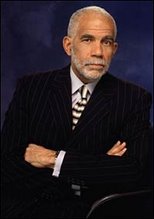
Senior Superior Court Judge Orlando Hudson is furious with the future DA of Durham.

Friday, July 06, 2007

Major Mistake Free DPD: Durham Cop Arrests Then Assaults Homeless Man

Laughter erupted when [DPD deputy chief Ronald H.] Hodge said he didn't "recall that the Durham Police Department has been involved in something where we made major mistakes in the past five years." - Brianne Dopart, The Herald-Sun (June 6, 2007)

"Property dispute cited in assault case against cop" - Aisling Swift, The News & Observer (June 20, 2002)

This week's arrest of Durham police officer Michael T. Aultman stemmed from a dispute over property in which the officer handcuffed a man, beat him with a baton and pointed his service pistol at him, a prosecutor said in a hearing Wednesday.

At the prosecutor's request, District Court Judge Craig Brown added $25,000 unsecured bail to the existing $25,000 bail posted after Aultman's arrest Monday on charges of first-degree kidnapping, assault inflicting serious injury and assault by pointing a gun.

Aultman, 29, who appeared in court in bluejeans and a blue geometric print shirt, said after the hearing that he is innocent. He and his attorney, Allen Mason, would not comment further. Aultman, who has been a Durham police officer since August 1999, makes $36,369 yearly and is on paid administrative leave pending an internal investigation. His wife, Francisca, 32, used their home at 1005 Ardmore Drive as collateral for bail.

At the hearing, Assistant District Attorney Freda Black noted that Aultman is accused of abusing his position and asked that he be barred from contacting the victim, Jesse Lee Dixon Jr., 30, and his family. Dixon's mother, Mamie, said her family wants privacy. "We're all having a hard time right now," she said as she stood outside her son's home at 608 Gattis St.

Two photos of Dixon were shown at the hearing and described to Brown, who is blind. They showed Dixon's right eye swollen shut and discoloration and bruising on the bridge of his nose, where there were also dark purple and red marks. There was yellow discoloration under his eye and a 1-inch, V-shaped bloody cut under his eye. Another photo showed blood discoloring much of his eyeball.

Dixon was treated at Duke Hospital and released after the incident Friday.

During the hearing, Black said Dixon was on a street corner at 4:30 p.m. when Aultman, in uniform and on duty, pulled over in his police car. Black said Aultman repeatedly asked where his property was during a dispute with Dixon over the unspecified property. "Mr. Dixon continued to tell him he did not know what he meant," Black said.

Aultman then handcuffed him, put him in the back of his police car and drove to a secluded area at Pettigrew and Ramseur streets, where he removed Dixon from the car and beat him with his fists and police baton, Black said.

"At one point ... he took his gun out, cocked it and basically threatened the victim's life if he were ever to tell anyone what transpired," Black told the judge.

Black said Aultman then removed the handcuffs and left, while a bloodied Dixon wandered around, asking for help. Police reports show police were called at 5:03 p.m. "The victim is very fearful because he did exactly what Mr. Aultman told him not to do," Black said.
"Indictment returned against former cop" - The News & Observer (August 21, 2002)
A Durham County grand jury indicted Michael T. Aultman, a former Durham police officer arrested in June after what police described as a dispute with another man over property.

Aultman, 29, was indicted on charges of first-degree kidnapping, assault with a deadly weapon, inflicting serious injury, assault inflicting serious bodily injury and assault by pointing a gun.

The charges involve an alleged beating June 14. A prosecutor said it stemmed from a dispute over property in which the officer handcuffed Jesse Lee Dixon, 30, beat him with a baton and pointed his service pistol at Dixon. Photographs of the victim showed Dixon's right eye swollen shut, bruises on his nose and under his eye, and other injuries.

Aultman, who had been an officer in Carrboro and at N.C. Central University before being hired in Durham, left the force June 29, according to city records. Those records showed that before the June 14 incident, the last action against him occurred in April. Details of the incident, or whether it resulted in disciplinary action, are not public.
"Claims against city dismissed in beating" - The News & Observer (January 10, 2006)

A judge has dismissed the claims against the city of Durham filed by a man who was taken into custody and beaten by a police officer.

Superior Court Judge Orlando Hudson dismissed Jesse Lee Dixon's suit against the city at a Monday hearing. The judge's ruling left in place the case against the officer. Dixon sued over a June 2002 incident in which authorities said former police officer Michael T. Aultman handcuffed Dixon and drove him to a spot downtown where the officer beat Dixon with a baton. He pointed his pistol at Dixon and told him to never tell what happened, authorities said.

In 2004 Aultman pleaded guilty to second-degree kidnapping and assault with a deadly weapon, inflicting serious injury. He left the police force in 2002.

The city argued that it was not responsible for Aultman's behavior for several reasons, including that he was pursuing a personal dispute against Dixon. Dixon's attorney, Alex Charns, argued that before the beating, Aultman made an apparently lawful arrest with the badge, gun and handcuffs provided by the city.

Charns said he intends to appeal the ruling
"Ex-officer must pay in beating incident" - The News & Observer (January 17, 2007)

A judge ordered a former police officer who admitted handcuffing and severely beating a man over a personal beef to pay $280,000 in the 2002 incident.

The former officer, Michael Aultman, did not answer the lawsuit against him, which was filed by Jesse Dixon.

Attorneys for Dixon told Superior Court Judge W. Osmond Smith III in a hearing Tuesday about the evidence they had against Aultman. Smith entered a default judgment against Aultman and ordered the former officer to pay $30,000 to cover medical costs and pain and suffering. Smith then ordered $250,000 in punitive damages, the most allowed by law.

In 2004, Aultman pleaded guilty to second-degree kidnapping and assault with a deadly weapon inflicting serious injury in the incident. He left the police force in 2002.

One of Dixon's attorneys, Alex Charns of Durham, said Dixon was homeless at the time and Aultman had arrested him for an alleged misdemeanor. While Aultman had Dixon in handcuffs, he interrogated him and beat him. Aultman apparently thought Dixon had stolen from him.

Monday, July 02, 2007

Permanent Removal vs. Resignation

Continued last Thursday, the hearing on the petition to permanently remove suspended Durham County District Attorney Mike Nifong from office is scheduled to resume this morning at 11:00AM. In response to the disgraced DA's "Hide the Nifong" ploy, Senior Resident Superior Court Judge Orlando Hudson delayed ruling on the 7A-66 petition filed by Durham resident Beth Brewer while creatively citing the opportunity for appeal created by Hudson's own failure to give Nifong proper notice of the hearing and chastising commoners for not understanding the law.
.
At the time, we noted:
Citing his superior understanding of the law and concern for legal issues, Durham County Senior Resident Superior Court Judge Orlando Hudson continued yesterday's hearing on the removal of Mike Nifong from the office of Durham County District Attorney until Monday in order to allow the disgraced DA the opportunity to resign from office after the end of the State's fiscal year.

“What justice requires is that the legal process be correctly followed…There is some question as to what kind of service is required to be had …by Mr. Nifong for this particular hearing. That is one of the concerns of the court…I understand the concern of the people…And that may be [one final insult to the citizens of Durham County]. But, I can’t make decisions based on what the people of Durham County think of Mr. Nifong. I have to make it based on what I perceive there being a legal issue. There’s a legal issue. I’ve reviewed this. I understand what Mr. Zaytoun is talking about… I understand that there is an issue that can be resolved and that’s going to be resolved either way. I’m perfectly satisfied that I can proceed as Mr. Zaytoun has said. But I need to head off things that will be a tremendous problem for me in the legal system and the public is not going to understand that. I don’t expect everybody in the public to be a lawyer and to understand the legal issues. That’s what I’m supposed to know. That’s what I’m supposed to do.” WRAL Hearing Video

Ironically, the complex legal issues extending beyond the comprehension of mere Durham citizens that Judge Hudson refers to were raised by his own apparent failure to allow Mr. Nifong sufficient notice of yesterday's hearing.

On Monday, a deputy sheriff tried to serve notice of the hearing at Nifong's house, but he wasn't there. His wife, Cy Gurney, wouldn't accept the paperwork, Hudson said. So the deputy posted the notice on Nifong's door.

Some legal observers suggested Wednesday that leaving the notice on a door was insufficient, since the law requires serving Nifong in person. The
same observers said the notices must be delivered at least 10 days before a scheduled hearing. Nifong's was left at his house three days in advance.

"He clearly did not get the required statutory notice," said veteran Durham lawyer Tom Loflin. "Even if sticking it on his door was adequate, which I highly doubt, the length of notice was not sufficient. The hearing will be a nullity. Should Nifong appeal, whatever happens is subject to reversal." Herald-Sun

Judge Hudson's newfound appreciation of proper service appears to be a reversal from the astute legal understanding he expressed earlier this week.

In further fallout from the Duke lacrosse sex-offense case, former District
Attorney Mike Nifong will undergo a civil removal hearing on Thursday unless he accelerates his projected resignation date of July 13, Durham's top judge said Monday.

Superior Court Judge Orlando F. Hudson said a deputy sheriff attempted to serve the hearing notice at Nifong's November Drive home Monday evening, but Nifong's wife -- Cy Gurney -- would not accept it.

The deputy then posted the notice on Nifong's door, according to Hudson.
"That's proper service as far as I'm concerned," the judge added. Herald-Sun

In allowing Nifong the opportunity to submit his resignation after the start of the State's new fiscal year, Hudson, it appears, attempted to make the removal hearing moot. Concurring with Hudson's decision, special prosecutor Robert Zaytoun, who was appointed by Hudson, misconstrued the aim of the statute he seemingly was charged with arguing for.

Hudson's plans to wait until 11 a.m. Monday to announce whether Nifong would be removed from office upset Betty Tenn Lawrence, the Asheville lawyer representing Brewer in her ouster petition.

Allowing Nifong to leave on his own schedule, Lawrence said, would be "one final insult to the citizens of Durham County."

But Zaytoun offered a different perspective. The rarely used procedure set up by the state legislature, he said, is designed to ensure that rogue prosecutors are removed from office, and a resignation would achieve the same result.

Although Mr. Zaytoun asserts that the effect of Nifong's immediate resignation would be the same as his removal from office by Hudson, the statute offers only one recourse for Judge Hudson: permanent removal from office. Faced with a similar proposition in 1978 when District Court Judge Linwood Peoples resigned his seat on the bench in an effort to avoid removal proceedings, the North Carolina Supreme Court ruled that Peoples' effort to skirt removal by resigning did not render the removal proceedings moot. In part, the Supreme Court's ruling was based on the additional relief offered by the removal hearing: prohibition from future election or appointment to judicial office and the loss of retirement benefits. While NCGS 7A-66 does not provide for Nifong's retirement benefits to be taken away, it does mimic the statute which provides for the removal of judges by offering "permanent removal" from office as the only punishment on a finding that grounds exist for removal. While Nifong's resignation would end his current term in office, it would not prohibit a fickle Governor Easley from appointing him again to the same position he sullied nor would it prevent the rogue prosecutor from seeking election should he regain his law license in the future. Permanent removal from office under 7A-66 would, however, prevent Nifong from ever serving as District Attorney again.
.
In re Peoples

On 1 December 1977 the Judicial Standards Commission, in accordance with its Rule 7 (J.S.C. Rule 7), 283 N.C. 763-770 (1973), notified Respondent that on its own motion it had ordered a preliminary investigation to determine whether formal proceedings should be instituted against him under J.S.C. Rule 8. The notice informed Judge Peoples (1) that the subject of the investigation would be his "alleged misconduct in the handling or disposition of criminal cases in the Ninth Judicial District, including the placing of numerous criminal cases in an inactive file in lieu of disposing of such cases in open court"; (2) that the investigation, reports and proceedings before the Commission would remain confidential as provided in J.S.C. Rule 4; and (3) that he had the right to present to the Commission for consideration "such relevant matter" as he might choose.

Judge Peoples had been a district court judge since 2 December 1968, the date the district court was established in the Ninth Judicial District.

On 10 January 1978 Judge Peoples tendered his resignation as a district court judge to the Governor in the following letter:

"Honorable James B. Hunt, Jr.

Governor of the State of North Carolina

Raleigh, North Carolina 27602

Dear Governor Hunt:

I hereby submit my resignation as a Judge of District Court for the Ninth Judicial District, State of North Carolina, effective February 1, 1978. I have been honored to serve the people of the District as a District Court Judge and hope to continue to serve them in some other capacity within the Judiciary.

Respectfully,

s/ Linwood T. Peoples"

On 20 January 1978 Governor Hunt accepted Judge Peoples' resignation to be effective on 1 February 1978.

On 30 January 1978 Judge Peoples was served with a formal complaint and notice which informed him (1) that the Commission had concluded "upon the original complaint and the evidence developed by the preliminary investigation" that formal proceedings should be instituted against him; (2) that H. D. Coley, Jr., would act as special counsel for the Commission; (3) that the charges against him were (a) wilful misconduct in office, and (b) conduct prejudicial to the administration of justice that brings the judicial office into disrepute; (4) that the alleged facts upon which the foregoing charges were based are specifically set out in the verified complaint attached to the notice; and (5) that it was his right to file a verified answer to the charges within 20 days.

...

While so far as our research can determine the issue has never arisen in a hearing before a body such as our Judicial Standards Commission, the courts of other jurisdictions have considered the effect of a public official's resignation on a proceeding to remove him from office. If the only purpose of the proceeding is to vacate the office, it has been held that the proceeding becomes moot upon the incumbent's resignation. People ex rel.

But where the statute imposes sanctions in addition to ouster, the proceeding may be prosecuted to its conclusion despite the official's resignation.

In State v. Rose, supra, the Attorney General for the State of Kansas brought an action in quo warranto in the Supreme Court to oust the defendant as Mayor of Kansas City, on the ground that he had purposely violated the State liquor laws. After the trial was completed, but before the court issued its judgment, the city council accepted defendant's resignation.

Shortly after the judgment of ouster, a special election was called to fill the vacancy in the office of mayor. In defiance of the judgment, defendant ran for the office and was elected to serve the balance of his original term. When Rose was cited for contempt, his defense was that the court lacked the power to exclude him from office since he had voluntarily resigned and surrendered the office prior to judgment.

Noting that the purpose of the proceeding was not only to remove Rose from office but also to disqualify him for the remainder of his term, the court held that the proceeding had not been rendered moot by defendant's resignation and found defendant in contempt. It explained its conclusions as follows:

"The violations of law by the officer are not only public offenses but in committing them he forfeits his right to the office, and this forfeiture may be judicially declared in a quo warranto proceeding. The judgment cannot be deemed to be invalid because of the resignation of Rose just before its rendition. The issues were joined, testimony had been taken, and the case was ripe for trial before the resignation, and the defendant could not then, by surrendering the office divest the court of jurisdiction, nor thwart the purposes of the proceeding. The public had an interest in the action, and the judgment to be rendered was of no less consequence to it than to the individual interests of the defendant."

...

If G.S. 7A-376 limited the sanctions for wilful misconduct in office to censure or removal, Respondent's resignation would have rendered the proceedings moot. The statute, however, envisions not one but three remedies against a judge who engages in serious misconduct justifying his removal: loss of present office, disqualification from future judicial office, and loss of retirement benefits. Only the first of these was rendered moot by Respondent's resignation.

...

Disqualification from office has long accompanied removal for misconduct under the impeachment provisions of both the state and federal constitutions. See, e.g., N.C. Const. of 1835, Art. 3, § 1. We do not believe that the legislature misconstrued the spirit of the amendment when it attached this same consequence to removal proceedings under G.S. 7A-376. The drafters of the impeachment provisions of the Constitution recognized that the removal of a public official for wilful misconduct in office without disqualifying him from future office might well be a futile gesture. In the absence of such a provision a judge who had been removed for wilful misconduct in office could not only run for election to fill out the term from which he had been removed but also -- as here -- seek higher judicial office. Such an event would obviously thwart the purpose of the removal proceedings, which is to protect the public from unfit public officials.

...

As an alternative ground for our holding that the North Carolina Constitution authorizes the General Assembly to prescribe disqualification from office as a consequence of removal under G.S. 7A-376, we note the language of Article VI, Section 8 of the Constitution, which provides as follows:

"Sec. 8. Disqualifications for office. The following persons shall be disqualified for office: "First, any person who shall deny the being of Almighty God. "Second, with respect to any office that is filled by election by the people, any person who is not qualified to vote in an election for that office. "Third, any person who has been adjudged guilty of treason or any other felony against this State or the United States, or any person who has been adjudged guilty of a felony in another state that also would be a felony if it had been committed in this State, or any person who has been adjudged guilty of corruption or malpractice in any office, or any person who has been removed by impeachment from any office, and who has not been restored to the rights of citizenship in the manner prescribed by law." (Emphasis added.)

...

For the reasons enunciated in this opinion it is ordered by the SUPREME COURT OF NORTH CAROLINA, in conference on 29 December 1978, that Respondent Linwood Taylor Peoples be and he is hereby officially removed from office as a judge in the General Court of Justice, District Court Division, Ninth Judicial District, for the wilful misconduct in office specified in the findings of fact made by the North Carolina Judicial Standards Commission, which findings the Court has adopted as its own.

In consequence of his removal, Respondent is disqualified from holding further judicial office and is, therefore, ineligible to take the oath of office as the resident Superior Court Judge of the Ninth Judicial District, the office to which he was elected on 7 November 1978 and certified by the State Board of Elections on 28 November 1978. For the same reason he is ineligible for retirement benefits.

Taking Judge Hudson at his word, we can only hope that this morning he will "head off things that will be a tremendous problem" by permanently removing Nifong from office thereby disqualifying the rogue prosecutor from holding the office of District Attorney in the future. And while "the public is not going to understand that," we know that Judge Hudson doesn't "expect everybody in the public to be a lawyer and to understand the legal issues." After all, "that’s what [Hudson's] supposed to know. That’s what [Hudson's] supposed to do.”

Friday, June 29, 2007

Hudson Allows "one final insult to the citizens of Durham County"

Citing his superior understanding of the law and concern for legal issues, Durham County Senior Resident Superior Court Judge Orlando Hudson continued yesterday's hearing on the removal of Mike Nifong from the office of Durham County District Attorney until Monday in order to allow the disgraced DA the opportunity to resign from office after the end of the State's fiscal year.

“What justice requires is that the legal process be correctly followed…There is some question as to what kind of service is required to be had …by Mr. Nifong for this particular hearing. That is one of the concerns of the court…I understand the concern of the people…And that may be [one final insult to the citizens of Durham County]. But, I can’t make decisions based on what the people of Durham County think of Mr. Nifong. I have to make it based on what I perceive there being a legal issue. There’s a legal issue. I’ve reviewed this. I understand what Mr. Zaytoun is talking about… I understand that there is an issue that can be resolved and that’s going to be resolved either way. I’m perfectly satisfied that I can proceed as Mr. Zaytoun has said. But I need to head off things that will be a tremendous problem for me in the legal system and the public is not going to understand that. I don’t expect everybody in the public to be a lawyer and to understand the legal issues. That’s what I’m supposed to know. That’s what I’m supposed to do.” WRAL Hearing Video

Ironically, the complex legal issues extending beyond the comprehension of mere Durham citizens that Judge Hudson refers to were raised by his own apparent failure to allow Mr. Nifong sufficient notice of yesterday's hearing.

On Monday, a deputy sheriff tried to serve notice of the hearing at Nifong's house, but he wasn't there. His wife, Cy Gurney, wouldn't accept the paperwork, Hudson said. So the deputy posted the notice on Nifong's door.

Some legal observers suggested Wednesday that leaving the notice on a door was insufficient, since the law requires serving Nifong in person. The same observers said the notices must be delivered at least 10 days before a scheduled hearing. Nifong's was left at his house three days in advance.

"He clearly did not get the required statutory notice," said veteran Durham lawyer Tom Loflin. "Even if sticking it on his door was adequate, which I highly doubt, the length of notice was not sufficient. The hearing will be a nullity. Should Nifong appeal, whatever happens is subject to reversal." Herald-Sun

Judge Hudson's newfound appreciation of proper service appears to be a reversal from the astute legal understanding he expressed earlier this week.

In further fallout from the Duke lacrosse sex-offense case, former District Attorney Mike Nifong will undergo a civil removal hearing on Thursday unless he accelerates his projected resignation date of July 13, Durham's top judge said Monday.

Superior Court Judge Orlando F. Hudson said a deputy sheriff attempted to serve the hearing notice at Nifong's November Drive home Monday evening, but Nifong's wife -- Cy Gurney -- would not accept it.

The deputy then posted the notice on Nifong's door, according to Hudson.

"That's proper service as far as I'm concerned," the judge added. Herald-Sun

Thursday, June 21, 2007

Flashback: Greatest Hits of Jim Hardin, Vol. XIV

"Tag-team justice" - The News & Observer (May 21, 1999)

The marriage of convenience between District Attorney Jim Hardin and chief Superior Court Judge Orlando Hudson may have begun as a straightforward attempt to clear a huge backlog of criminal cases in Durham County.

...

But the arrangement now suggests a too-cozy collaborative effort between a gung-ho prosecutor and a judge who must maintain his impartiality. The relationship also illustrates potential risks under the North Carolina law that gives district attorneys the power to say when and in front of which judge criminal cases are heard.

Hardin controls the scheduling of those cases, and Hudson in recent years has heard nearly all the major criminal cases in Durham County. (Since 1995, Hardin has channeled 11 of 12 high-profile murder cases to Hudson's courtroom.) ... other judges and defense attorneys indicated, in a News & Observer story, that they find the arrangement curious...

... Superior Court Judge Abe Jones of Wake County, recalling a Durham rotation, notes that he ruled against prosecutors on some occasions and wasn't assigned to hear criminal cases again...

One judge who seems to find the Hardin-Hudson arrangement less than ideal is state Chief Justice Burley Mitchell...

Is Hardin seeking an advantage? He says no, that he's a diligent prosecutor trying to move cases through the system. But Hudson said, "Jim Hardin doesn't put himself at a disadvantage." That's a disturbing statement, for it indicates that Hudson believes Hardin is indeed "judge-shopping," and that there's nothing particularly wrong with it. A judge should have a more ambitious hope for the system than the cynicism that statement conveys.

North Carolina is the only state that gives DAs the exclusive power to schedule cases. A bill sponsored by Sen. Frank Ballance Jr. of Warrenton would end that, but it has been gutted (again this year) by a powerful district attorneys' lobby that can't countenance letting loose the courthouse reins. The Hardin-Hudson partnership is a strong argument for reviving Ballance's bill.

It's also a phenomenon that, in the meantime, Chief Justice Mitchell should address in no uncertain terms - not for efficiency's sake, but for the sake of justice.

Flashback: Greatest Hits of Jim Hardin, Vol. X

"Durham DA gets 'judge-shopping' reputation " - John Sullivan, News & Observer (May 19, 1999)
Five years after Durham District Attorney Jim Hardin and Chief Superior Court Judge Orlando Hudson teamed up to reduce a huge backlog of cases, the district's other three Superior Court judges say the two are bypassing them and funneling the county's major criminal cases to Hudson.
.
Defense lawyers call it judge-shopping, and they say Hardin is doing it to punish judges who have ruled against the prosecution.
.
"I think there is forum-shopping being abused by the district attorney, and many experienced judges have heard few felony cases while many are placed on one judge's platter," said Durham Superior Court Judge David Q. LaBarre, a 20-year veteran of the bench.
.
Superior Court Judge Ronald Stephens says the one major case he has heard in the past several years came only after he complained to Hudson and the state Administrative Office of the Courts. "It's like running a basketball team with a player-coach that brings the ball down the court and shoots every time," Stephens said. "There is some frustration in that."
.
Superior Court Judge Leon Stanback, who was named "Outstanding Trial Judge of the Year" for 1998 by the North Carolina Academy of Trial Lawyers, says he can't recall hearing a first-degree murder trial since Hardin became district attorney in 1994. "I think they select certain judges, and DAs are in good position to do that," he
said. "If they don't like the way they rule, I imagine they have the prerogative of what judges get certain cases."
..
Hudson and Hardin say the perception is the result of a necessary relationship that saved Durham's court system from collapsing under the weight of a huge case backlog. They began discussing the problem in 1993, Hardin said, before he became district attorney and just after a lawsuit was filed against then-District Attorney Ronald Stephens, who held the job for 11 years and is now a Superior Court judge.
.
Hudson and Hardin devised a case management system that went into effect in 1995, and Hudson says he took many cases just to get the system working.
..
"As a result, over the past four years I have handled just about every criminal case in Durham County," Hudson said. "I think that is the way it just worked out - that I got 11 of 12 important cases. From that standpoint, of taking on cases to get it done, it's probably a legitimate complaint."
.
He says Hardin is just using the scheduling power given him by the legislature. "Jim Hardin doesn't put himself at a disadvantage," Hudson said. "I don't know of any official that puts his office at a disadvantage. I think the DA has a lot of power, and when the legislature leaves scheduling in the hands of the DAs, you have sanctioned judge-shopping."
.
... Judge-shopping is legal in North Carolina, the only state in the country where district attorneys decide when and where a case goes to trial. The American Bar Association and the National Center for State Courts say the practice isn't fair. Defense lawyers and judges say it allows district attorneys to punish judges who rule against them by giving them minor cases while important cases wait to be heard by judges who are thought to be sympathetic to a prosecutor's case.

Tuesday, June 19, 2007

IN RE The matter of Removal of District Attorney, Michael B. Nifong

ORDER OF SUSPENSION
PURSUANT TO N.C. GEN. STAT. SEC 7A-66

........THIS MATTER HAVING COME on to be heard before the Honorable Orlando F. Hudson Jr., the Senior Resident Superior Court Judge of Durham County, and having reviewed the affidavit in support of the removal of Michael B. Nifong as District Attorney for the Fourteeth Judicial District, HEARBY [sic] FINDS that there is probably [sic] cause to believe that the District Attorney has engaged in willful misconduct in office and conduct prejudicial to the administration of justice whch brings the office into disrepute and HEREBY ORDERS AND DECREES THAT Mr. Nifong shall be suspended with pay pending a hearing on this matter to be set within thiry (30) days of this order.
So Ordered this 19th day of June 2007.
Orlando F. Hudson, Jr.
Senior Resident Superior Court Judge

IN THE MATTER OF MICHAEL B. NIFONG: ORDER

IT APPEARING to the satisfaction of the undersigned Senior Resident Superior Court Judge of the Fourteenth (14th) District, on the findings of the North Carolina State Bar:
.
That Michael B. Nifong, District Attorney for the Fourteenth (14th) Prosecutorial District has engaged in conduct that brings the office of district attorney into disrepute; and
.
That the findings of the State Bar after notice and opportunity to be heard establish probable cause to believe the aforementioned conduct occurred; and
.
That Mr. Nifong's behavior has been prejudicial to the administration of justice.

THE COURT CONCLUDES as a matter [sic] law based on these findings:

That pursuant to N.C.G.S. 7A-66 this court has authority to suspend the District Attorney from performing the duties of his office, and
.
That the Sheriff of Durham County by this Order has authority to enforce the courts decree.

THEREFORE IT IS HEREWITH ORDERED, ADJUDGED, AND DECREED:

That Michael B. Nifong is suspended from performing the duties of District Attorney for the Fourteenth (14th) Prosecutorial District; and
.
That the Sheriff of Durham County take all measures to secure from Mr. Nifong all indicia of office pertaining to access thereto.

This the 19th day of June 2007.
Orlando F. Hudson
Senior Resident Superior Court Judge

Hudson Does The Right Thing, Finally

After reconsidering the implications of allowing disgraced Durham County District Attorney Mike Nifong to delay his long overdue resignation until next month, Durham County Senior Resident Superior Court Judge Orlando Hudson has decided to suspend Mr. Nifong immediately pending a hearing on Durham resident Beth Brewer’s 7A-66 petition to remove the rogue prosecutor from office.
The county's top judge plans to suspend Durham District Attorney Mike Nifong from office Tuesday and appoint a special prosecutor to push ahead with a case against Nifong, who is soon to be stripped of his license. N&O

Durham Superior Court Judge Orlando Hudson said Monday night that he had signed an order removing District Attorney Mike Nifong from office, effective Tuesday morning, and named a Wake County attorney to handle a case against Nifong. WRAL
Early media reports yesterday indicated that Judge Hudson, oddly citing “paperwork” concerns, indicated that he would not move forward with any action on the petition he had, contrary to North Carolina law which required him to act within thirty days of the February filing, held in abeyance for several months.
“Superior Court Judge Orlando Hudson in Durham has a petition pending before him asking that he remove Nifong from office. Hudson said today that he does not plan to act on the petition. He said Nifong would be gone from office before he had all the necessary paperwork to remove him.” N&O
Later, Judge Hudson appeared to modify his reasoning and was quoted by The Herald-Sun as "being taken out of it" by Nifong's strategic resignation date.
Hudson said Nifong's disbarment will become effective 30 days after being served with a written disbarment order, which probably won't be until late this week.

Since the disbarment date will fall after Nifong's final work day of July 13, Hudson said there no longer is a need for him to hold a removal hearing.

"This takes me out of it," Hudson said. "I'm not seeing a need for a hearing unless he doesn't resign when he said he will." H/S
Finally, Judge Hudson wisely decided to comply with State law and issued an order to suspend the DA effective today, asked Durham County Sheriff Worth Hill to ensure that Nifong comply with his order, and appointed a special prosecutor to present the case for removal of Mr. Nifong from office at a hearing which must take place within ten to thirty days.
Hudson, who has been overseeing a case demanding Nifong's removal from office, said he would file a notice with Durham County Sheriff Worth Hill to enforce his suspension order.

Hudson also said he will appoint Wake County attorney Robert Zaytoun as a special prosecutor for the Nifong removal case.

While Hudson said he and the sheriff cannot keep Nifong from entering the DA's office, the sheriff has the power to limit Nifong's access by -- for example -- banning Nifong from his parking space near the Durham County courthouse and suspending the key card he would need to enter that building during non-office hours. H/S

"I have thought about the situation, and this is the way I wish to proceed," said Hudson, who initially agreed to allow Nifong to work until next month.

As part of the suspension, Hudson said he would order the sheriff on Tuesday to prevent Nifong from carrying out any duties of the district attorney.

A hearing on the removal request must then be held within 30 days. AP

Hudson defended his power to suspend Nifong as clearly justified by Nifong's disbarment Saturday by the State Bar.

"All you need to suspend him is probable cause," Hudson said. "You have much more than probable cause with a clear and cogent finding by the State Bar."

Hudson explained his appointment of a special prosecutor by noting that he, Hudson, has the power to suspend Nifong temporarily without a court hearing, but can make the suspension permanent only with a hearing, in which Zaytoun would be needed. H/S

Hudson’s amended decision followed widespread uproar from elected officials and the public in response to Mr. Nifong’s decision to delay his promised resignation.
Nifong surprised many today when his resignation letter to Easley stated that Nifong would stay in office until July 13.

Durham City Councilman Eugene Brown said Nifong cannot stay in office.

"Our former district attorney needs to go quickly and quietly in to the night," Brown said. N&O

"What is he trying to prove?" Durham City Councilman Eugene Brown said. "This is like rubbing salt into the community's wound. He has resigned and been disbarred. Does he not get it?"

Brown said Gov. Mike Easley and other officials have to press Nifong to leave office "in a couple of days."

Easley said he would immediately remove Nifong if he could.

"You are given a lot of power and you can destroy a reputation in moments with just a few words," said Easley, himself a former prosecutor. "This was much more than a mistake." H/S

"I think he should have left and not gone back, except to clean out the office," he [Easley] said. "I don't think he ought to be in the district attorney's office, having been disbarred. WRAL

"Given what's transpired, it probably would be cleaner for [Nifong] to be using the next few days to clean out his desk," Durham County Commissioners Chairwoman Ellen Reckhow said. "I just don't want to pile on, but preferably a shorter time would be better."

"The sooner Mike moves on with his life, personally and professionally, and the sooner the governor gets an interim appointment in there, the better for all of us," City Councilman Mike Woodard added.

City Councilman Thomas Stith also indicated he would like Nifong to leave office this week.

"It's a disservice to the community for him to continue to hold onto office," said Stith, who added that Nifong should have made his resignation effective immediately. "I don't understand why he'd want to continue to drag this out for another 30 days. It is again making us all suffer for his decisions." H/S

Jackie Brown, Nifong's former campaign manager who parted ways with him over his handling of the lacrosse case, said Monday that Nifong's decision to remain in office four more weeks made those words seem disingenuous.

"To me, he is thumbing his nose at his own statements that he made before the bar," said Brown, a Durham resident who spent the past week in Raleigh attending the bar proceedings. "He's going out on his own terms, on his own time. Last week, I believed he was sincere in what he was saying about resigning to let Durham heal, to let his family heal and just to get this all behind him. ... Then he comes out this morning and it's business at usual." N&O

"That man should not spend one more minute in office," [Beth] Brewer said Monday. N&O

Despite the early indications that Judge Hudson had initially declined to comply with the statutory directives of NCGS 7A-66 in contradiction not only to the law but also to his own statements and previous order, later media reports presented Hudson's decision as if it was not based on the pressure of the outcry but rather based on Nifong's attempt to delay his resignation and fears of the legal repercussions of that decision.
Superior Court Judge Orlando Hudson, chief resident superior court judge in Durham County, came to his decision late today after learning of Nifong's plans to remain in office until July 13. N&O

Hudson initially said he would have preferred that Nifong step down immediately. Criminal defendants and defense lawyers might challenge the district attorney's authority over the next month, creating potential problems, he said.

"There is some concern that a resignation effective at a later date could cause complications as far as legal proceedings go," Hudson said earlier Monday. WRAL

Nifong, who was disbarred Saturday for breaking more than two dozen rules of professional conduct in his handling of the case, said in a letter released Monday that he would leave office July 13. His departure date wasn't soon enough for Hudson, who decided to suspend Nifong from office. AP

“I watched the proceedings just like everybody else did,” Judge Hudson said last night. “I felt that he should resign immediately.” NYT

While Judge Hudson deserves due credit for finally acting on the filed by Beth Brewer in February, it must be noted that, were it not for the foresight, courage, and tenacity of Ms. Brewer, Hudson would not have the power to suspend the disgraced Minister of Injustice without having a 7A-66 petition before him.

Hudson has the power to suspend Nifong because in February, Beth Brewer, a Durham resident, filed a motion seeking to have the career prosecutor removed because of his actions in the Duke University lacrosse case. Brewer worked against Nifong in his November campaign for district attorney. Brewer ran a campaign for County Commissioner Lewis Cheek, who said he was running, but wouldn't accept the job. N&O

In February, Durham resident Elizabeth Brewer had filed a civil complaint asking Hudson to remove Nifong under a section of state law. She claimed Nifong had exhibited willful misconduct and conduct prejudicial to the administration of justice that brings the office into disrepute.

Hudson put off action on Brewer's motion then pending the outcome of the Bar action against Nifong, and he did the same against in April when she renewed her request. WRAL

Admittedly and in the interests of full disclosure, we are biased in our appreciation for Beth's efforts, having had the opportunity to work with her as part of the LieStoppers team while witnessing the transformation from concerned observer to active citizen working fearlessly against the power of the unethical District Attorney starting with her decision to start the Recall Nifong effort in response to Lewis Cheek's decision to not campaign, continuing with her filing of the petition to remove Nifong from office, and culminating with the persistent pursuit of action on her 7A-66 affidavit. Among the many heroes the Hoax has produced, Brewer deserves to be counted. (Now, if we can only convince her to run against Nifong supporter Diane Cattoti for a seat on the city council...)

In closing this post, there are two final notes we'd like to add.

First, a reminder that the North Carolina Institute for Constitutional Law will host a continuing legal education program on Wednesday, June 27 entitled "Prosecutorial Misconduct in Light of the Duke Lacrosse Case." Betty Tenn Lawrence, attorney for Beth Brewer in the filing of the petition to remove Mike Nifong from office, has been added to the panel of speakers alongside Nifong's attorney, David Freedman, and Duke University Professors of Law, James Coleman and Michael Tigar. Ms. Lawrence will discuss the process for removing a rogue District Attorney from office.

Lastly, it must be noted that the Bill for removal of unqualified District Attorneys and Judges received much attention yesterday due to the urgency created by Mike Nifong's attempt to extend his stay in office despite his disbarment and promise to resign. At his press conference yesterday, Governor Easley endorsed the measure and members of the NC House, where the Bill is to be voted on today after passing the Senate unanimously, indicated that the Bill would be pushed through quickly.

Governor Easley says he would remove Durham DA Mike Nifong from office immediately if he could.

Easley says he plans to sign a bill moving through the General Assembly that would give the governor power to remove a district attorney from office.

He says if the bill is signed into law before July 13th -- the day Nifong plans to leave office -- then Easley would use his new power. AP

Easley endorsed a bill in the state legislature that would allow him to replace district attorneys and judges as soon as they are disbarred. The bill is slated for a vote in the House tomorrow, but it will have to be voted on again by the Senate, where it has already passed.

Rep. Deborah Ross said the bill should not take long.

"The governor could get it by the end of the week," said Rep. Deborah Ross, a Raleigh Democrat who is shepherding the bill through the House.

Easley said if he had the power he would replace Nifong immediately.

"I'd do it today if I could," he said. N&O

While the stated motivation for the Bill, the deceptive title, and the equally misleading statements of Governor Easley give the impression that the proposed law would have allowed Easley to remove Nifong from office and protect the citizens of North Carolina from the burden of having disbarred District Attorneys and Judges from staying in office, the poorly constructed Bill does exactly the opposite.

As the Bill, in its third edition, reads now it would have served to disallow Easley from removing Nifong from office immediately, as the Governor falsely suggested, or anytime prior to Nifong's official disbarment which will not take effect until thirty days after the Disciplinary Hearing Committee submits a formal written Order of Disbarment. Officially, Nifong will not be disbarred until well after his intended date of resignation and the Bill would prevent Easley from taking action against him until that time. Further, if Nifong had not waived his right to appeal, the dangerous legislation would have prevented action to remove him likely until his term in office was completed as the Bill allows a disbarred DA (or Judge) to remain in office until all appeals are exhausted. As such, the Bill offers no protection for anyone except a disbarred judicial official contrary to the hype that accompanies its impending enactment.

If time allows this morning, please send an email to all members of the NC House asking that they vote against the Bill and send it back to committee for revision so that it accomplishes what it intends. The third reading (final vote) of the Bill is the first item on the House calendar for today.

Click here to send an email to all members of the North Carolina House of Representatives.

Thursday, June 07, 2007

Judge Smith Takes Aim At Nifong

On December 28, 2006, Durham County District Attorney Mike Nifong sent a letter to NC State Bar prosecutor Katherine Jean in response to ethics charges prompted by the December 15 disclosure of the conspiracy to withhold evidence of factual innocence from the Duke Innocents. As part of his initial defense against the charges that would serve as the basis for the Bar's amended complaint, the rogue DA suggested that Judge Osmond Smith’s failure to report his misconduct to the State Bar and unwillingness to discipline him for his misrepresentations to the Court indicated that he had not committed ethics violations.

To approach this allegation from a different angle, let us start from the presumption that this allegation is true. Then my false representation to the Court would have been made at the same hearing where evidence was received, uncontested and under oath, which revealed its falsity. Judge Smith would then have found himself, as the Court having jurisdiction over the matter in question and having direct knowledge through testimony of my alleged professional misconduct, with 1) the authority under RPC Rule 8.3 to impose discipline on me directly (see Comment [2]), or, in the alternative, 2) the responsibility to report such misconduct to the North Carolina State Bar. Assuming that Judge Smith is not the person who filed the instant grievance against me, his failure to take either of these actions would indicate that he believed either 1) that no such misrepresentation had been made, or 2) that any misrepresentation that might have been made failed to raise “a substantial question of [my] honesty, trustworthiness or fitness as a lawyer.” Either conclusion would disprove the allegation that I had violated the Rules of Professional Conduct.

Judge Smith put Nifong’s faulty logic to rest today with a “Memorandum in the Cause” which suggests that the Judge intends to reprimand the DA.

On December 15, 2006, the Court commenced the scheduled pretrial hearing to address all matters requested by the parties for hearing. Included was the commencement of a hearing upon a motion filed by the defendants on December 13, 2006 entitled "MOTION TO COMPEL DISCOVERY: EXPERT D.N.A. ANALYSIS", in which the defendants requested:

(a) Production of certain items set forth in the motion; or

(b) An order directing Dr. Brian W. Meehan of DNA Security, Inc. to submit to questioning under oath regarding matters raised in the defendants' motion; or

(c) An evidentiary hearing on matters raised in the motion; and

(d) Any other order appropriate in the interests of justice.

At the hearing, the State tendered Dr. Meehan for examination by defense counsel without any initial questions by the State. Upon completion of the testimony of Dr. Meehan, the hearing on the defendants' December 13, 2006 discovery motion was recessed, without completion or other resolution, at the defendants' request before going forward.

Significant concerns regarding discovery issues arose from the December 15, 2006 hearing. Since the hearing was recessed without completion as set forth above, these concerns were not addressed by the Court at that time, and due to subsequent developments have not yet been addressed by the Court. Certain of those concerns and the consequences or effects thereof became moot by the State's eventual dismissal of all of the charges herein. Certain other of those concerns remain as they may pertain to actions of counsel.

Further, since the hearing was recessed without completion and without addressing the concerns mentioned above, it would be incorrect to draw any conclusions as to what the Court believed or disbelieved regarding such concerns or as to any opinions of the Court regarding these or any other matters before the Court other than those opinions expressed in open court, by the Court's rulings, and/or by this memorandum.

...

Though the criminal charges in these cases have been dismissed, the Court, nevertheless, retains the jurisdiction and duty to act upon pending or potential...matters related to disciplinary actions involving attorneys before the Court...

In addition to debunking Nifong's false assertion that he approved of the rogue DA's dissembling and accepting the DA's bold challenge to uphold the duties of the Court, Judge Smith subtly implies, by signaling his intention to move against the District Attorney, that Judge Orlando Hudson errantly supported his failure to comply with the statutory directives of NCGS 7A-66 with the false assertion that it would violate Defendant Nifong's right to due process for Hudson to proceed with a parallel proceeding against the DA.
In addition to the action by the State Bar, there is a pending proceeding seeking removal of the District Attorney from office pursuant to NCGS 7A-66; such proceeding has been held in abeyance pending the trial before the Disciplinary Hearing Commission...Nothing stated herein shall be interpreted or construed in any way so as to be considered inconsistent with or in limitation of the authority of The North Carolina State Bar, or the Senior Resident Superior Court Judge of Durham County or his designee under NCGS 7A-66.
Smith's subtle message to Hudson was not lost on the Senior Resident Superior Court Judge of Durham County who announced today that he was prepared to proceed with a hearing on the illegally ignored 7A-66 filing immediately following Nifong's State Bar trial.

Earlier this year, Durham resident and Nifong political opponent Elizabeth Brewer filed two civil complaint calling for Nifong to be removed.

Senior Resident Superior Court Judge Orlando Hudson, however, delayed acting on the complaints until the ethics case is resolved, citing the complaints mirror the ethics charges.

Hudson told WRAL on Tuesday, though, that he is prepared to conduct a summary hearing right after the State Bar trial, meaning that issues decided in the State Bar trial won't need to be redecided.

The petition to remove a district attorney means the residing Superior Court judge can remove Nifong from office if there's evidence he brought the office in to disrepute, among other things. WRAL

Additional coverage of Smith's filing:

Wednesday, June 06, 2007

Judge Smith's Memorandum in the Cause

THE GENERAL COURT OF JUSTICE
DURHAM COUNTY
SUPERIOR COURT DIVISION

06 CRS 4331-4333 STATE v. FINNERTY
06 CRS 4334-4336 STATE v. SELIGMANN
06 CRS 5581-5583 STATE v. EVANS

MEMORANDUM IN THE CAUSE

The Court files the following as a memorandum in the cause herein:
.
1. By order of August 17, 2006, the Chief Justice of the Supreme Court-of North Carolina assigned these cases to the undersigned judge, and this Court thereupon began its involvement herein.
.
2. The Court promptly scheduled an in-chambers conference with counsel for all parties and thereafter conducted same on August 25, 2006. At such meeting all counsel discussed with the Court matters related to the current status of the case, pending and anticipated pretrial motions to be scheduled and heard, other possible and potential pretrial motions, tentative trial scheduling, and other administrative matters.
.
More specifically, the State reported that it would be requesting a trial setting for early 2007, February or as soon thereafter as practicable after the hearing of pretrial motions. Counsel for the defendants noted that they would be requesting pretrial hearings on pending and anticipated motions for discovery, motions for a bill of particulars, motion for the Court to modify the provisions of a ruling by a prior judge related to Rule 3.6 of the North Carolina Revised Rules of Professional Conduct, motions to suppress, and possibly a motion for change of venue. Counsel for defendant Seligmann noted that though he had filed a motion for recusal of the District Attorney, that he was requesting that it not be heard at this time. The Court took the position thereon that the motion to recuse the District Attorney was not withdrawn, but that same would only be heard upon a request by the defendant therefor.
.
The Court advised all counsel that it was available and would conduct hearings on these and any other matters that may arise upon request and/or notice by any party.Upon request and agreement of all parties, the Court scheduled pretrial hearings for September 22, 2006 to address the defendants' motions for discovery, for a bill of particulars, for modification of the prior order relative to RPC Rule 3.6, and for other matters that may be requested by the parties.
.
The Court indicated at the August 25, 2006 meeting that it would prohibit electronic media and still photography coverage of pretrial proceedings. An administrative order for same was announced that day and subsequently filed herein.
.
The Court also made it clear to the media and others that it would not be making any public comments about the cases outside of open court, nor would it be submitting to any media interviews.
.
3. On September 22, 2006, the Court conducted the scheduled pretrial hearing to address all matters requested by the parties for hearing. At such hearing, the Court:
(a) Heard and ruled upon motions for discovery;
(b) Heard and ruled upon defendants' motions for a bill of particulars;
(c) Heard and ruled upon defendants' motion to modify previous judge's order relative to the Rules of Professional Conduct;
(d) Heard the State's motion to compel regarding the defendants' pretrial public opinion poll by telephone survey; such was ruled upon by the Court on September 26, 2006 after an in camera review of submitted documents;
(e) Granted a protective order by consent regarding records of the alleged victim;
(f) Addressed and ruled upon certain administrative matters, including those related to transcripts of the proceedings herein; and
(g) Scheduled the next pretrial hearing as agreed to by the parties for October 27, 2006.
4. On October 27, 2006, the Court conducted the scheduled pretrial hearing to address all matters requested by the parties for hearing. At such hearing, the Court:

(a) Executed the discovery order and executed an order for payment of costs related to compilation of discovery documents, both from the September 22, 2006 hearing;

(b) Re-addressed, with follow-up, some discovery issues regarding any statements of the alleged victim to the District Attorney and regarding notes and reports of investigators;

(c) Pursuant to request of the parties, undertook for in camera review voluminous documents containing confidential records relating to the alleged victim for determination by the Court as to whether same should be disclosed to the defendants; and

(d) Scheduled the next pretrial hearing as requested and agreed to by the parties for December 15, 2006.

5. After an in camera review of the subject documents, the Court, on December 15, 2006, entered its order directing disclosure of certain confidential records to the defendants and the State, subject to strict adherence to the applicable protective order. The Court met with counsel in chambers prior to the scheduled December 15, 2006 pretrial hearing to discuss and implement procedures for copying and dissemination of copies of the disclosed records. All of the records reviewed by the Court were ordered to be filed with the Clerk of Superior Court under seal, to remain sealed and not available for public inspection.
.
6. On December 15, 2006, the Court commenced the scheduled pretrial hearing to address all matters requested by the parties for hearing. Included was the commencement of a hearing upon a motion filed by the defendants on December 13, 2006 entitled "MOTION TO COMPEL DISCOVERY: EXPERT D.N.A. ANALYSIS", in which the defendants requested:

(a) Production of certain items set forth in the motion; or

(b) An order directing Dr. Brian W. Meehan of DNA Security, Inc. to submit to questioning under oath regarding matters raised in the defendants' motion; or

(c) An evidentiary hearing on matters raised in the motion; and

(d) Any other order appropriate in the interests of justice.

At the hearing, the State tendered Dr. Meehan for examination by defense counsel without any initial questions by the State. Upon completion of the testimony of Dr. Meehan, the hearing on the defendants' December 13, 2006 discovery motion was recessed, without completion or other resolution, at the defendants' request before going forward.
.
Significant concerns regarding discovery issues arose from the December 15, 2006 hearing.
Since the hearing was recessed without completion as set forth above, these concerns were not addressed by the Court at that time, and due to subsequent developments have not yet been addressed by the Court. Certain of those concerns and the consequences or effects thereof becamemoot by the State's eventual dismissal of all of the charges herein. Certain other of those concerns remain as they may pertain to actions of counsel.
.
Further, since the hearing was recessed without completion and without addressing the concerns mentioned above, it would be incorrect to draw any conclusions as to what the Court believed or disbelieved regarding such concerns or as to any opinions of the Court regarding these or any other matters before the Court other than those opinions expressed in open court, by the Court's rulings, and/or by this memorandum.
.
Further, at the December 15, 2006 hearing, the Court:

(a) Scheduled hearings on defendants' motions to suppress and motion for change of venue to begin February 5, 2007. The delay until February was necessitated by a January trial conflict of counsel for defendant Seligmann. Considering such conflict, the defendants requested and the State suggested the date of February 5, 2007 as preferable to all parties.

(b) Granted the defendants' request for an order for paternity testing regarding the alleged victim, conditional upon the alleged victim's pregnancy and delivery of a child.

(c) Recessed the December 15, 2006 hearing with the condition that if anything developed that needed to be heard before February 5, 2007, that the Court would be available for same.

7. On December 22, 2006, the State dismissed the rape charges against all defendants.
.
8. On December 28, 2006, The North Carolina State Bar filed a complaint against the District Attorney before the Disciplinary Hearing Commission seeking disciplinary action against the District Attorney, alleging violation of the Revised Rules of Professional Conduct arising from his conduct related to the prosecution of these cases herein.
.
9, On January 12, 2007, the District. Attorney requested the Special Prosecutions Section of the North Carolina Attorney General's Office to assume full responsibility for prosecution of the remaining charges against the defendants.
.
10. On January 13, 2007, the North Carolina Attorney General accepted the request of the District Attorney and took over prosecution herein.
.
11. On January 24, 2007, The North Carolina State Bar filed an amended complaint against the District Attorney, alleging additional violations of the Revised Rules of Professional Conduct arising from his conduct related to the prosecution of these cases herein.
.
12. On January 30, 2007, the Court conducted an in-chambers conference with the Special Prosecutors and the attorneys for the defendants. The. State requested and the defendants consented to continue the scheduled February 5, 2007 hearings to May 7, 2007, to allow the Special Prosecutorsadditional time for investigation and evaluation of these cases. The Court granted such request and continued the matters to May 7, 2007.
.
13. On April 11, 2007, .the Special Prosecutors dismissed all of the remaining charges against all defendants herein.
.
14. In addition to the action by the State Bar, there is a pending proceeding seeking removal of the District Attorney from office pursuant to NCGS 7A-66; such proceeding has been held in abeyance pending the trial before the Disciplinary Hearing Commission.
.
15. Though the criminal charges in these cases have been dismissed, the Court, nevertheless, retains the jurisdiction and duty to act upon pending or potential:

(a) Matters related to requests for expungement;

(b) Matters related to interpretation and enforcement of protective orders;

(c) Matters related to sealed records;

(d) Matters related to applicable investigative and administrative orders;

(e) Matters related to disposition of evidence;

(f) Matters related to disciplinary actions involving attorneys before the Court;
and

(g) All other matters within the express, implied, statutory, and inherent authority of the Court.

Nothing stated herein shall be interpreted or construed in any way so as to be considered inconsistent with or in limitation of the authority of The North Carolina State Bar, or the Senior Resident Superior Court Judge of Durham County or his designee under NCGS 7A-66.
.
Dated: 4 June 2007
W. Osmond Smith, III Judge Presiding

Tuesday, April 24, 2007

With Apologies to ABBA...

Orlando
by Joan Foster

Do you read the press, Orlando?
I remember long ago when I still held them in my thrall.
They hailed my confidence, Orlando!
And never seem to mind my tactics or my stunning lack of evidence at all.
The metanarrative had begun!
If the Dukies just stand trial, a Durham jury will make them fall!

Now they've turned on me, Orlando.
Ever hour, every minute seems to last eternally
I am so afraid , Orlando
I'm so grateful that you have shown some fine support for me!
I appreciated the delay.
Now surely the Durham power guys can do a deal that makes this go away?

There was something in the air last Spring
Townie Revenge, Orlando!
Standing with the NC NAACP!
And the Fem-nazis! Orlando!
Though I never thought that we could lose, there's no regret
If I had to do the same again
I would, my friend, Orlando.

Remember Election Night, Orlando?
Harris Johnson's jubilant smile upon his face.
We were so happy then, Orlando!
No out-of-towners were gonna tell us locals how to run our little place!
The Big Guys had my back!
How proud they were that night that little Mikey'd won his race!

There was something in the air that night
I pandered so right, Orlando.
Privelege and race!
The hero of the 88! Orlando!
And though I never thought that we could lose, I'm not lost yet!.
I have YOU to protect a friend.
With me to the end. Orlando!

There was something in the air last Spring
Townie Revenge, Orlando!
Standing with the NC NAACP!
And the Fem-nazis! Orlando!
Though I never thought that we could lose, there's no regret
If I had to do the same again
I would, my friend, Orlando.

Perverting the Law, Just Another Day on the Bench

In ruling on Spruill v. Lake Phelps Volunteer Fire Department, Inc., the North Carolina Supreme Court stated:
“A court cannot ignore clear and precise statutory language. Judicial interpretation allows a court to resolve statutory ambiguities, not create them.”
Repeatedly, the United States Supreme Court has affirmed that “when the terms of a statute are unambiguous, judicial inquiry is complete” and “when a rule (or a statute) is clear, a court cannot distort its meaning.

Yesterday, for the second time in two months, Durham County Superior Court Judge Orlando Hudson has decided that he has power that both the North Carolina and United State Supreme Courts do not. Placing himself above the law, Judge Hudson continues to ignore the clear and precise statutory language of NCGS 7A-66.

WRAL reported Judge Hudson's latest decision as follows:
“For the second time in two months, a local resident has filed court papers seeking the removal of Durham County District Attorney Mike Nifong from office.

"But a judge overseeing the case said he would again deny the motion.

“Elizabeth Brewer filed a civil complaint against Nifong in February, alleging willful misconduct and conduct prejudicial to the administration of justice that brings the office into disrepute. The charges stemmed from his handling of the investigation of sexual assault allegations against members of the Duke University lacrosse team.

“Superior Court Judge Orlando Hudson delayed any action on the complaint until an ethics case filed by the North Carolina State Bar against Nifong for his handling of the Duke lacrosse case is completed.

“Hudson told WRAL on Monday he would deny Brewer's motion again, because ruling on it would deny Nifong's right to due process before the State Bar.”
In denying the motion asking him to follow the unambiguous statutory directives of NCGS 7A-66, Judge Hudson again defies the will of the State Legislature and ignores the precedent set by higher courts.

The language of NCGS 7A-66 is clear:
“A proceeding to suspend or remove a district attorney is commenced by filing with the clerk of superior court of the county where the district attorney resides a sworn affidavit charging the district attorney with one or more grounds for removal. The clerk shall immediately bring the matter to the attention of the senior regular resident superior court judge for the district or set of districts as defined in G.S. 7A-41.1(a) in which the county is located who shall within 30 days either review and act on the charges or refer them for review and action within 30 days to another superior court judge residing in or regularly holding the courts of that district or set of districts.”
When faced with an appeal on a previous 7A-66 ruling, the North Carolina Supreme Court demonstrated the clear and precise language of the statute when it outlined the precise statutory directive as follows:
“It is true that a district attorney removal proceeding under N.C.G.S. § 7A-66 is an inquiry; it is neither a civil suit nor a criminal prosecution. It is commenced by the filing of one or more sworn affidavits with the clerk of superior court of the county where the district attorney resides. N.C.G.S. § 7A-66. The matter is then brought to the attention of the senior regular resident superior court judge who within thirty days shall act on the charges or refer them to another superior court judge to be acted upon.”
In rationalizing his initial decision to delay acting on the affidavit in February, Judge Hudson distorted the meaning of the word “act” to include the “act” of not acting. The News & Observer described Hudson's perversion of the statute as follows:
The meaning of 'act'

“The disagreement may be over the definition of the word "act."

“Brewer and her attorney believe that under the law, Hudson has to actually consider the petition within a month. Hudson said Monday that by postponing the petition, he has acted on it.”
Citing Scales v. United States, the US Supreme Court in Aptheker v. Secretary of State stated:
"It must be remembered that "[a]lthough this Court will often strain to construe legislation so as to save it against constitutional attack, it must not and will not carry this to the point of perverting the purpose of a statute . . ." or judicially rewriting it."
In Durham, however, it must be remembered that, although the Supreme Courts of North Carolina and the United States must not and will not strain to the point of perverting or judicially rewriting statutes, the Superior Court will often strain to construe legislation so as to save a rogue prosecutor a few more months in office.

Monday, April 23, 2007

Motion to Suspend Nifong Filed

A ten page motion has been filed today with the Durham County Superior Court requesting the Court act as directed by NCGS §7A-66, suspend Durham County District Attorney Mike Nifong pending further proceedings, and to proceed with his removal from office as directed by NCGS §7A-66. In support of the motion, petitioner Beth Brewer reiterates her charges that DA Nifong "has committed willful misconduct in office, and that he has engaged in conduct prejudicial to the administration of justice which brings the office into disrepute, both of which are grounds for removal from office under NCGS §7A-66."

As filed with the Court, the motion reads, in part, as follows:

MOTION TO SUSPEND DISTRICT ATTORNEY NIFONG PENDING FURTHER PROCEEDINGS AND TO REMOVE HIM FROM OFFICE
COMES NOW PETITIONER ELIZABETH M. BREWER, by and through the undersigned attorney, and prays the Court to act as directed by NCGS §7A-66, Removal of District Attorneys, to suspend District Attorney Michael B. Nifong, pending further proceedings, and to proceed under the provisions NCGS §7A-66 to remove him from office, and in support of this motion shows the Court the following:

1. On February 9, 2007, Petitioner filed an affidavit in this matter under the provisions set forth in NCGS §7A-66, Removal of district attorneys, requesting the removal of District Attorney Mike Nifong on the grounds that District Attorney Nifong has committed willful misconduct in office, and that he has engaged in conduct prejudicial to the administration of justice which brings the office into disrepute, both of which are grounds for removal from office under NCGS §7A-66.

2, NCGS §7A-66 states in part: "A proceeding to suspend or remove a district attorney is commenced by filing with the clerk of superior court of the county where the district attorney resides a sworn affidavit charging the district attorney with one or more grounds for removal. The clerk shall immediately bring the matter to the attention of the senior regular resident superior court judge for the district or set of districts as defined in G.S. 7A-41.1(a) in which the county is located who shall within 30 days either review and act on the charges or refer them for review and action within 30 days to another superior court judge residing in or regularly holding the courts of that district or set of districts. If the superior court judge upon review finds that the charges if true constitute grounds for suspension, and finds probable cause for believing that the charges are true, he may enter an order suspending the district attorney from performing the duties of his office until a final determination of the charges on the merits. During the suspension the salary of the district attorney continues. If the superior court judge finds that the charges if true do not constitute grounds for suspension or finds that no probable cause exists for believing that the charges are true, he shall dismiss the proceeding."

3. On February 12, 2007, this Court issued an Order that "all further proceedings in this case are hereby held in abeyance pending the trial before the North Carolina State Bar."

4. More than sixty days have passed since the filing of the Petition in this matter.

5. As part of the February 12 Order, the Court made "preliminary findings of fact," including notice of District Attorney Nifong's pending disciplinary proceedings before the North Carolina State Bar, scheduled to begin on June 12, 2007.

6. On April 13, 2007, the panel of the North Carolina Disciplinary Hearing Commission assigned to Mr. Nifong's case denied Mr. Nifong's Motion to Dismiss some of the charges before the panel. Attachment 1

7. The Court can take notice of the fact that the Grievance Committee of the North Carolina State Bar conducted a nine-month examination of Mr. Nifong's conduct in this case prior to finding probable cause of his violations of ethics rules and filing its complaint and amended complaint (filed with Petitioner's Affidavit) with the Disciplinary Hearing Commission of the North Carolina State Bar.

8. The Court correctly did not find that a complete evidentiary record is required prior to a probable cause determination, which is what the statute by its plain language requires to be made within 30 days of the filing of the petition.

9. On April 11, 2007, the Attorney General of the State of North Carolina, Mr. Roy Cooper, announced the results of the extensive investigation made by the special prosecutors, Jim Coman and Mary Winstead, into the cases cited in Petitioner's Affidavit. Attachment 2

10. In that statement he announced the dismissal of the charges in the cases. He stated unequivocally that the defendants were innocent. He stated that there was no evidence to support the charges, and said they were "the tragic result of a rush to accuse and a failure to verify serious allegations." Attachment 2

11. Attorney General Cooper further stated:

"The eyewitness identification procedures were faulty and unreliable. No DNA confirms the accuser's story. No other witness confirms her story. Other evidence contradicts her story. She contradicts herself. Next week, we'll be providing a written summary of the important factual findings and some of the specific contradictions that have led us to the conclusion that no attack occurred.

In this case, with the weight of the state behind him, the Durham District Attorney pushed forward unchecked. There were many points in the case where caution would have served justice better than bravado. And in the rush to condemn, a community and a state lost the ability to see clearly. Regardless of the reasons this case was pushed forward, the result was wrong. Today, we need to learn from this and keep it from happening again to anybody.

We have good District Attorneys in North Carolina who are both fair and tough. And we need these forceful, independent prosecutors to put criminals away and protect the public. But we also need checks and balances to protect the innocent. This case shows the enormous consequences of overreaching by a prosecutor. What has been learned is that the internal checks on criminal charges – sworn statements, reasonable grounds, proper suspect photo lineups, accurate and fair discovery – all are critically important." Attachment 2

12. In a further interview Mr. Cooper stated: "When you have a prosecutor who takes advantage of his enormous power and overreaches like this, then yes, it's offensive." Attachment 3

13. These remarks by the Attorney General, made after a three month investigation, coupled with the finding of probable cause by the Grievance Committee of the North Carolina State Bar for multiple violations of ethic rules, and Mr. Nifong's response to the Bar's Complaints, clearly constitute grounds for a finding of probable cause by this court that Mr. Nifong has acted in a manner giving grounds for removal under NCGS §7A-66, an existing mechanism for protecting the public and restoring trust and honor in the criminal justice system of NC Judicial District 14A, Durham County, North Carolina.


14. Mr. Nifong has to this date ignored numerous requests that he resign from office, and has stated through his attorney his intention to serve out his term. Attachment 4

15. By his own misconduct, Mr. Nifong's continuing in office as District Attorney is an absolute impediment to the existence of a trustworthy criminal justice system in Durham County.

16. Every day that the justice system permits Mr. Nifong to remain in his position of great power is an additional reason for the citizens to doubt that real justice exists in Durham County.

17. Mr. Nifong's willful misconduct and conduct prejudicial to the administration of justice which brings the office into disrepute is so evident and transparent at this point that his prompt removal from office can be based on matters in public record. The report Mr. Cooper stated would be released this week will constitute a sufficiently full evidentiary record to go forward with a removal hearing.

18. Mr. Nifong should be suspended immediately. This will permit him to concentrate on his own defense, while permitting the citizens of Durham County to have restored faith in their criminal justice system.

19. The State Bar proceedings concern whether Mr. Nifong committed breaches of the ethics code of the Bar. They may result in various sanctions, ranging from a reprimand to the revocation of his license to practice law. They may be delayed at any time by the filing of additional charges. They have a different purpose than judging whether Mr. Nifong should be removed from office.

20. The concurrent statutory authority of the Bar and the inherent authority of the Courts over the conduct of attorneys is well-established. Here, there is not only inherent authority but a legislative directive to the Court to conduct its own inquiry.

21. NCGS §7A-66 is explicit in its time requirements. The clerk shall "immediately" bring the affidavit to the resident Superior Court judge, who "shall within 30 days" either refer them to another judge or act on them, by dismissal, or by finding that the charges if true constitute grounds for removal, and finding probable cause for believing the charges are true.

22. The inherent power of the courts to do all things necessary and proper for the administration of justice does not include the power to ignore specific statutory directives which require prompt action to protect the citizenry.

23. Mr. Nifong's due process rights would not be impacted in any way by suspension from office.

24. Mr. Nifong's due process rights do not include the right to remain in his position of power and the authority of the state while bringing shame and ridicule on the justice system of Durham County.

Wherefore, the Petitioner prays that this Court suspend District Attorney Michael B. Nifong immediately; that this Court proceed with a hearing to remove him from office, that the Court permit an opportunity to be heard on these issues, and that this Court order such further relief as it deems just and appropriate.