Showing posts with label Robert Steele. Show all posts

Tuesday, September 30, 2008

Duke University puts up a Wall of Silence

The Chronicle is reporting the Duke Board of Trustees meeting will be held without access to reporters or interested public. Normally some parts of the meetings were open to the public since 1971 where students and alumni could listen in on the meetings. Traditionally reporters have been allowed to Q & A with the Duke President and Chairman of the Board, BUT not this year.

The Board of Trustees has taken a critical eye to its practices in the past year, and the conclusions of an internal evaluation will result in fewer people taking a close look at them.

When the Trustees gather this weekend, all parts of the meeting will be closed, from the plenary session to a press conference that once gave media an opportunity to ask questions of President Richard Brodhead and Board Chair Robert Steel, Trinity '73.

"Just to be frank, when you have an open session, what it means in effect is that the Trustees are no longer engaged in the kind of confidential conversation about open questions of the University," Brodhead said, adding that the Trustees hope to improve efficiency, given the limited time weekend meetings afford them.

Michael Schoenfeld, vice president for public affairs and government relations, said there was no particular impetus for the changes, apart from a desire to assess how the Board could best operate. He noted that such evaluations are typical of nonprofit boards, and in general can be driven by external events that highlight a need to increase oversight or otherwise evaluate how well a board is serving its purpose... Chronicle


Hiding from Reporters?

So why the wall of silence this year? Could it be that Brodhead and Steel do not want to take questions about their management of the University? The cost of the defense on the Duke Lacrosse Case is soaring for the City of Durham to over $1.2 million and one can only imagine a similar amount for Duke.

Wall of Shame: Wachovia CEO Bob Steel

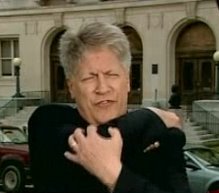
Then there is Steel's abject failure with his management of Wachovia Bank which cost billions to investors. Never has a new CEO lost so much money so fast. After appearing on CNBC Mad Money to reassure investors two weeks ago the stock value of Wacvhovia dropped 80% in one day.

Just two weeks ago, Wachovia CEO Bob Steel told Mad Money viewers that out of $500 billion in loans on the bank’s books, only $10 billion were bad. Today, Citigroup bought Wachovia “for a pittance,” Cramer said, because the actual total was $42 billion, and the FDIC was about to seize Wachovia. Mad Money

Crammer went on TV yesterday and apologized for his having Steele on his program and placed him on his corporate Wall of Shame! See Video

Boo-yah!

Duke Lacrosse Hoax/Frame awaits in the wings.

There is the very real possibility that Duke University will be held liable for tens of millions of dollars and it could be much worse if it is discovered that the University knew the players were innocent and threw the whole team under the bus as is alleged in the two lawsuits filed in the case. In the Ekstrand lawsuit Senior Duke Administration officials were alleged to have attended critical meetings with the City of Durham , DPD, and Nifong where there were told of the lack of evidence and Duke employees joined in doing the Durham Shuffle! Brodhead & Steel are alleged to have known of the innocent of the players very early and appeased the angry Durham mob incited by some of their very own faculty.

See Quasi's Thread over at the Liestopper's Forum

It is no wonder that Brodhead and Steel will be in hiding!

Tuesday, April 29, 2008

Did Duke Police Officers Concealed Exculpatory Evidence?

In the amended complaint filed by Durham attorney Robert Ekstrand he makes a serious accusation against the Duke PD as they followed the Chairman's Directive.

A. To cease all efforts to find evidence of the truth, particularly evidence that contradicted the accuser’s account;

B. To conceal evidence of Duke Police Officers’ prior investigative role in the investigation; pg 140

Following that direction Duke Police Officers "concealed their observations during their interactions with Mangum that tended to prove Mangum’s claim was a fraud"

C. Duke Police Officers Concealed Exculpatory Evidence by Fabricating False and Misleading Hospital “Witness Statements”

466. On or about March 27, 2006, Nifong directed the Duke Police Officers who interacted with Mangum to submit reports of those interactions to his assistant, Sheila Eason. In response, Duke Police Supervising Defendants directed those Duke Police Officers who interacted with or observed Mangum at the hospital to write—not reports—but instead what can only be described as “bystander witness statements” that deliberately concealed their exculpatory observations of Mangum during the early morning hours of March 14th.

467. As a result of The Duke Officers’ statements were all remarkably consistent in substance. They were identical in form. Each one was a one-page statement written on plain paper, and identically styled. The Duke Officers’ statements repeatedly refer to the investigation of Mangum’s claims as “the Durham Police investigation.” They also uniformly disavow any role whatsoever in an investigative capacity; describe their role in the investigation as the functional equivalent of a bystander witness. Among other things, the Duke Police Supervising Defendants directed the officers to:

A. Conceal the fact that the Duke Police had jurisdiction over the investigation;

B. Conceal the fact that the investigation was a Duke Police investigation, until Duke abdicated its jurisdictional responsibility to initiate and conclude an investigation of Mangum’s allegations;

C. Conceal their observations during their interactions with Mangum that tended to prove Mangum’s claim was a fraud;

D. Reveal observations of Mangum’ s behavior only to the extent that the observations tended to enhance the reliability of Mangum’s claim; and

E. Two officers who wrote these “witness statements” have since taken employment at other law enforcement agencies. Their accounts changed significantly when they left the Duke Police Department.

1. Officer Mazurek

468. In his March 29, 2006 “witness statement” as a Duke Police Officer, Mazurek wrote:


“On 03-14-06, I was the Officer in Charge at Duke Hospital. I was informed by security that... a male nurse was evaluating Ms. Mangum. When he tried to gather information about her injuries she started to cry and asked him to leave her alone.... Ms. Mangum ’s shirt appeared to be torn on the left shoulder.... [The Durham Officers] told me that this incident may have occurred at 610 N.
Buchanan involving several Duke Students. After my initial observation of Ms. Mangum I did not have any further contact with her.”

469. After obtaining employment elsewhere, Mazurek was free to reveal the exculpatory information he obtained at DUMC on March 14th, and he did. On November 2, 2006, Mazurek reported, among other things, his belief—formed at the time he observed Mangum—that Mangum was “faking” the whole thing.

2. Officer Falcon

470. In her March 28, 2006 “witness statement” regarding her observations of Mangum, Officer Falcon wrote that Mangum “was shaking, crying, and upset. ... She kept crying out to the male nurse and Durham Officers (in the doorway) that she was violated and raped and that her friend stole her money and left her at the event that she was working at.” Regarding her role in the investigation, Falcon wrote:


“I stood outside the ED Triage area as a Duke Representative, while Durham City proceeded with their investigation.... Not at any time did I direct any questions to Ms. Mangum concerning the investigation by Durham City PD. Not at any time was I a direct party to any investigation(s) of Durham City PD of this alleged incident, other than to assist the outside agency of Durham City PD.”

471. After obtaining employment elsewhere, Falcon was free to report any exculpatory information she obtained at DUMC on March 14th, and she did. On October 30, 2006, Falcon reported, among other things, that an unusual number of Duke Officers, even Major Schwab, were called in shortly after Mangum arrived at the E.D.; she thought it was odd that “all the supervisors met out on the loading and had a meeting.”

472. Further, Duke Police Supervising Defendants had required Falcon to conceal from her written “statement” her recollection that “a Durham Police Sergeant kept going in and out of Mangum’s room, saying ‘I have to conduct an investigation’ ... .” After some time passed, the Sergeant emerged from Mangum’s room, and “he said loudly so everyone around heard him, ‘I think she is lying!’”

3. Officer Day

473. Officer Day had already submitted a bona fide Duke Police Department report on March 14, 2006, before the Chairman’s Directive was issued transforming the Duke Police investigators into bystanders. Day’s original report is therefore not written on plain paper styled as a witness statement; it was written on a pre-printed Duke Police Department standard police report form, it contained a synopsis of much of the exculpatory evidence gathered by Durham Police and Duke Police on March 14th, and concluded that the felony investigation had been closed.

474. Because everything in Day’s report was already approved by the Day Chain of Command and was at odds with the directive to conceal exculpatory material, Duke Police did not submit his original report with the “bystander” statements. Instead, Duke Police sent a “Continuation Report” that the supervisors in the Day Chain of Command directed him to write. Day’s “Continuation” report states:


This narrative is a continuation to an operations report in reference to assisting Durham Police at 610 N. Buchanan Street [sic]. After all Duke Police officers cleared from 610 N. Buchanan Street [sic] I went to the Duke Emergency Department to meet with Lt. Best (watch commander for Duke Police). While standing at the emergency department entrance I overheard the District 2 Sergeant state that the victim (which [sic] was inside the ED) had changed her story several times, and that if charges were filed they would probably not exceed that of a misdemeanor.

In reference to the conversation with Durham Officers I did not speak directly with the victim or with an investigator, nor did I ask questions regarding the case. The information was second hand from the patrol Sergeant standing on the emergency room dock outside the ED."

475. Day’s “Continuation Report” deliberately impeaches his own contemporaneously written report of the events he observed that evening, including his synthesis of all the reports he received from the Durham Police Officers in the transition briefing at the E.D. in the early morning hours of March 14, 2006. The effect of Day’s Continuation Report was to nullify the evidentiary value of his report of the many immediate impressions of the Durham officers who interacted with Mangum throughout the evening and believed Mangum’s claims were a hoax.

The full amended complaint with embedded Video

Friday, April 18, 2008

“Steel is going to f**k those lacrosse players.”


(Ekstrand & Ekstrand LLP has filed an amended complaint)

(Case 1:07-cv-00953-JAB-WWD Document 33-2 Filed 04/17/2008 Page 139 of 486)

XVII. THE CHAIRMAN’S DIRECTIVE

445. The Chairman was aware that Mangum was a deeply disturbed young woman who exhibited signs of psychosis, and that her accusations were false.

446. The Chairman was aware that Gottlieb was on a vendetta in response to the Gottlieb Dossier.

447. The Chairman was aware that Nifong was preparing to ride the case into office.

448. The Chairman knew that Addison was lying publicly about the evidence.

449. The Chairman was aware that the investigation belonged to the Duke Police Department.

450. The Chairman knew that, if the public perceived Duke abandoning the Plaintiffs, the public would conclude that Duke knew they were guilty.

451. The Chairman knew Plaintiffs were innocent, and, to the extent he was not certain, he ensured that neither he nor any senior University officials saw the evidence of innocence that he knew was offered.

452. To the Chairman, Plaintiffs’ innocence was irrelevant: what was “best for Duke” turned upon perception.

453. Aware of these things, the Chairman announced that it would be “best for Duke” if Plaintiffs were tried and convicted on Mangum’s false accusations.

454. In response to a plea for Duke to show some measure of support for the students who were being framed in plain view of the University’s leadership, the Chairman explained, “sometimes individuals have to be sacrificed for the good of the Organization.”

455. The Chairman’s Directive, as it was understood by one who received it, was straightforward: “Steel is going to f**k those lacrosse players.”

XVIII. THE CONSPIRACY TO CONCEAL THE DUKE POLICE DEPARTMENT’S STATUTORY AUTHORITY TO INTERVENE AND INVESTIGATE

456. To that end, the Chairman directed the Duke Police Department to act in furtherance of that objective. For example, the Chairman, through Brodhead, Trask, Burness, and Graves, directed the Duke Police Department:

A. To cease all efforts to find evidence of the truth, particularly evidence that
contradicted the accuser’s account;

B. To conceal evidence of Duke Police Officers’ prior investigative role in the
investigation;

C. To conceal all evidence of the Duke Police Department’s primary jurisdictional authority to control the investigation and its power to intervene to prevent the wrongs conspired to be done;

D. To fabricate false and misleading police reports, disguise them as bystander
“witness” statements, that covered-up the Duke Police witnesses’ personal knowledge of Mangum’s psychosis, her radically changing story, the overwhelming consensus among her doctors and nurses at DUMC that she was lying, and the inability of any doctor, nurse, or police officer to find even a spider-web of evidence that she was raped or sexually assaulted; and

E. To direct those who were at the hospital on March 14th to give “not-for attribution” false reports about Mangum’s appearance at DUMC in order to lend credibility to Mangum’s false claims in the eyes of the public.

457. At all times subsequent to the Chairman’s Directive to force a trial and convictions, the Duke Police Department had the power to revoke its delegated authority and/or to intervene to prevent or aid in preventing the unlawful conspiracies and violations of Plaintiffs’ constitutional rights as alleged herein, and, yet, refused to do so.

458. At all times relevant to this action after March 25, 2006, the Chairman and the members of the CMT directed the Duke Police Department not to intervene to prevent or aid in preventing the wrongs that they knew were conspired to be done to Plaintiffs and their teammates by their co-defendants in this action. In compliance with the Chairman’s Directive, the Durham Police ‘turned a blind eye,’ and did nothing.

Wednesday, December 19, 2007

Durham-Duke Crisis Response Team


B. The CMT’S Acts in Furtherance of the Conspiracy

414. On or before March 25, 2006, Defendant Steel directed Defendant Brodhead to create a Crisis Management Team (“CMT”) to manage the University’s actions relating to the investigation of Mangum’s claims. The original participants in the CMT were Defendants Steel, Brodhead, Lange, Trask, Burness, and Moneta. Defendant Victor J. Dzau (Chancellor for Health Affairs, and President and CEO of Duke University Health Systems, Inc.) was added to the CMT shortly after it became clear that DUHS and Tara Levicy were critical to the State’s case. Defendant Allison Halton (the University’s Secretary) was also added to the CMT following its first meeting on March 25, 2006.

415. Both Defendants Trask and Burness had personal knowledge of the Gottlieb Dossier and the fact that Gottlieb had been removed from the patrol beat as a result of his misconduct in dealings with Duke students. Upon information and belief, Defendant Steel and CMT Defendants were all aware of these facts on or before March 25, 2006.

Thursday, April 12, 2007

Steele Praises Brodhead, Reaffirms Decision to Submit to Railroading of Students

In a letter to the Duke Community written on behalf of the Board of Trustees, Chairman Robert Steele praises President Richard Brodhead while asserting that the decision to defer to Defendant Mike Nifong's twisted version of a justice system was "essential."
Dear Member of the Duke University Community,

I write to you on behalf of the Trustees of Duke University.

Today the North Carolina State Attorney General announced that all remaining charges against David Evans, Collin Finnerty and Reade Seligmann have been dropped and should never have been brought. This announcement explicitly and unequivocally establishes the innocence of David, Collin and Reade, who with their families have suffered an unimaginable year of accusation and public scrutiny. They deserve our respect for the honorable way they have conducted themselves during this long legal ordeal that ends with their exoneration.

The Attorney General determined that there was no credible evidence to support the charges that were brought, with so many statements of certainty, by the Durham District Attorney last spring. Many have suffered from his actions, these three students and their families most of all. The Attorney General's investigation places responsibility for this miscarriage of justice with the District Attorney, and we now look to the proceedings of the state bar to call him to account before his peers.

Much as we wish that these three young men, their teammates and their families and indeed the whole community of people who love Duke could have been spared the agony of the past year, we believe that it was essential for the University to defer to the criminal justice system. As imperfect and flawed as it may be, it is that process that brings us today to this resolution.

Throughout the past year President Richard Brodhead consulted regularly with the trustees and has had our continuing support. He made considered and thoughtful decisions in a volatile and uncertain situation. Each step of the way, the board agreed with the principles that he established and the actions he took. As we look back and with the benefit of what we now know there is no question that there are some things that might have been done differently. However, anyone critical of President Brodhead should be similarly critical of the entire board.

In closing, we express our relief for today's outcome and recognize the character that our three students, their teammates and all of their families have shown over the past year. Furthermore, we hope that the resolution of this unfair, divisive and painful episode can serve to unite us all. There is much to learn from the events that we have lived through, and we intend to put this learning to use. Duke is a great university that steps up to challenges and opportunities, and together we will use this moment to make our community stronger.

Robert K. Steel, Chair,
Duke University Board of Trustees